Showing posts with label Independent. Show all posts

3.11.19

Mary Jane's Not A Virgin Anymore

Dir: Sarah Jacobson
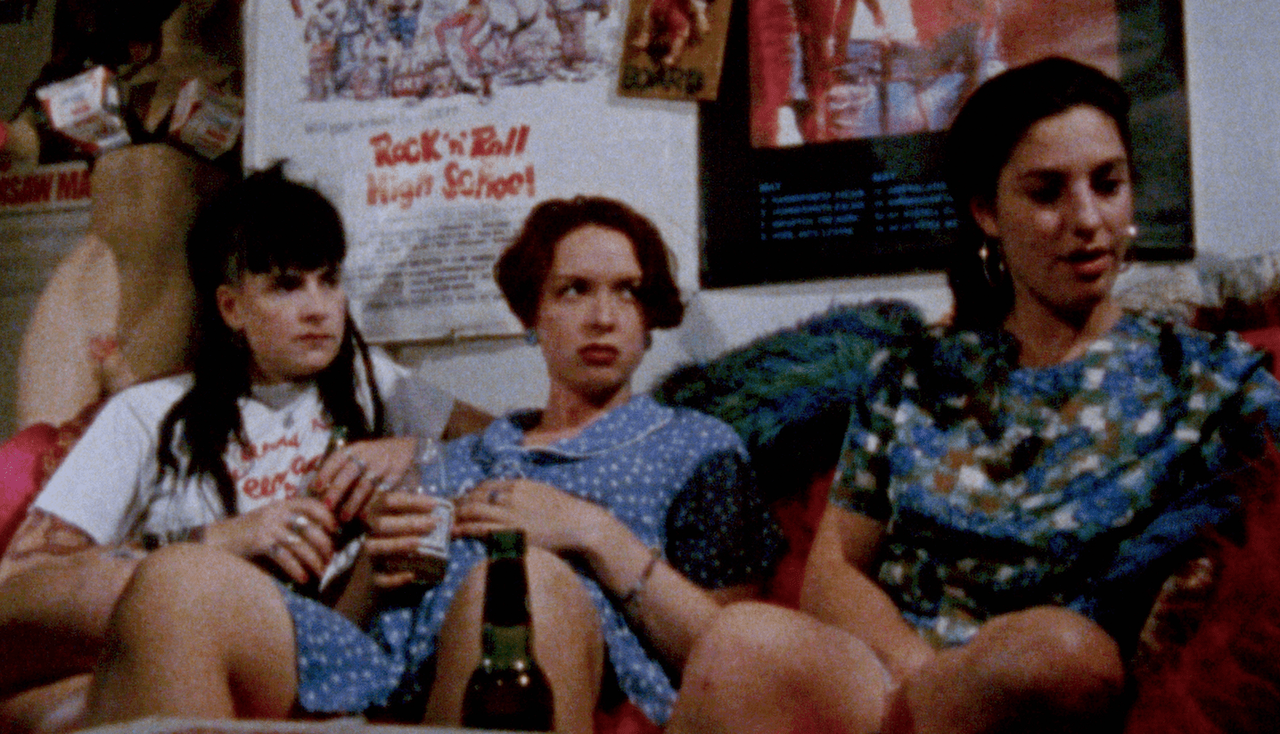
Coming of age cinema is rich and wide in the variety of stories it tells and the way it interprets them, but it can’t be denied that it has a preoccupation with certain kinds of story. One of the most prevalent of these is following teens on the way to the rite of passage that is the loss of their virginity. From the title, you might expect Sarah Jacobson’s only feature film to be one of these, but in this and many other respects, it is more interested in subverting the cliches of coming of age films.

Jacobson’s film skirts expectations from the beginning, as it opens with Jane (Lisa Gerstein) losing her virginity. What the rest of the film is about is something more sophisticated than the many almost quest-based narratives that follow (mostly) boys efforts to have sex for the first time, but a young woman who, while she has now had sex, doesn’t really understand it. 

Much of the film takes place at a local art cinema where Jane and her friends work. We see her trying to sort through her feelings for various male friends, especially Tom (Chris Enright), who is handsome and seems more mature than most of the others, and Ryan (Bwana Spoons), who is nerdy and seems genuinely nice, but somewhat oblivious to Jane’s mild crush on him. 

Jacobson’s writing has a very matter of fact tone to it. This comes through strongly as Jane listens to her friends’ stories of losing their virginity, including one involving a rape. In this case in particular, the frankness is almost disconcerting, these are issues seldom confronted in teen cinema and which as a society we’re still coming to grips with dealing with at all, in media or in law. To see Jacobson and her characters deal with it head on in 1996, and to realise that this scene still feels anomalous, is a real indictment of the cultural conversation and a powerful statement about how viscerally real Mary Jane’s Not A Virgin Anymore can feel. 

This is very much an underground film, shot on Super 8 with largely non-professional actors, and the look and performances can be variable. Many scenes look very dark and the sets underdressed, the budget and the limitations of the film stock showing through. Other scenes are lent an immediacy and intimacy by the limits of Jacobson’s resources, especially a very close up back seat sex scene between Jane and Tom, which brilliantly captures the awkwardness and the desire between them and a montage of Jane and Ryan on a day out together, which has the warmth and carefree feel of a couple of friends messing about for the camera. 

The acting captures the dynamic between late teens/early 20s friends well, with Gerstein and Beth Allen (a punk singer in her only film role) the standouts. The scene in which Allen’s Ericka talks to Jane about masturbation is another notable moment in the film’s dedication to representing sexuality from a female point of view.  For the first hour, the writing captures the aimlessness and alienation the characters sometimes feel, without it weighing heavily on the film. It’s in the third act, when Jacobson injects a plot point that feels designed solely to draw things together with a big, dramatic, event that the writing rings a little false and the main performances falter a bit.

Though it has its flaws, Mary Jane’s Not A Virgin Anymore is not just a very good film, it’s something rarer than that; a film that matters. 23 years after it was made it still feels different within the genre, it remains fierce and defiant, the sound of a clearly identifiable voice who knows exactly what she wants to say and to whom. The tools may not always work in the film’s favour, but the vision is always clear and compelling. This is just one of many reasons that it’s tragic that Sarah Jacobson is no longer with us. Jacobson died of uterine cancer in 2004, aged just 32. Her body of work is sadly small: this sole feature, the short I Was A Teenage Serial Killer, a handful of music videos and a retrospective making of for Ladies and Gentlemen, The Fabulous Stains (a film whose influence is felt throughout Mary Jane). I don’t doubt that there was much more to come from this vital and fascinating voice and it’s great to see that Mary Jane’s Not A Virgin Anymore has now been preserved on a new Blu Ray release, also including I Was A Teenage Serial Killer.
★★★★

15.4.19

Streaming Suggestions: Cold November

For me, the renaissance in coming of age cinema - American coming of age cinema in particular - has been something that has largely happened outside the mainstream, and much of that content is now emerging less through traditional cinematic and physical home entertainment channels and more via various streaming sites. There are upsides and downsides to streaming. One of the bigger downsides is that, as with a traditional release model, there is a bias towards the mainstream. A film with a proven track record of success in cinemas or with big names in front of or behind the camera is always going to get put to the front of the line for your attention. What is good about streaming is that even if a film has a much lower profile, it IS still accessible - you don't have to drive for miles to the only cinema showing it. You do, however, have to do some digging and take some chances on films you won't know much, if anything, about going in. 

In this series, I'm aiming to do some of that digging for you, to find the little gold nuggets that you may have missed in the mass of available options and get you interested in watching them.

Cold November [2017]
Dir: Karl Jacob
Depending on what your family is like, rites of passage can come in many different forms. For 12 year old Florence (Bijou Abas), that comes in the form of the first time she's being allowed to go out solo on one of the deer hunts her family loves. That hunt happens to coincide with several other markers of growing up, from being gifted the gun her mother and aunt both learned to shoot with, to getting her first period.

Cold November deals with growing up as a series of jolts. Some, like the arrival of Florence's first period, are expected and others are shocks, like the aftermath of the death of her young cousin, now at least a few months ago, but still raw. Flo attempts to take all of these things and more in her stride. Sometimes, as in a touching scene in a car in the middle of the night as she comforts her aunt, she succeeds, but the reality is that she still only twelve. Self-assured as Flo is, we see her vulnerable moments - both those she hides and those she has to make more visible - in Bijou Abas' excellent performance.

With director Karl Jacob taking a supporting role as her uncle, the family dynamic ends up grounded and credible, which is hugely important in a film that is never driven by plot over character and the direction, while intimate, pulls back enough that we never feel manipulated by the filmmaking. It is worth noting that the film doesn't pull back from the realities of hunting, showing what appears to be real footage of deer being skinned and gutted, so consider that before you sit down to watch this one.

Like many of the better coming of age films, Cold November may be at some remove from its viewers lives in its details, but  in the broader themes I would imagine it's very familiar. I'd recommend it for adults who like the genre, but also for kids of Flo's age, who will likely find a lot to relate to here..

Cold November is available for free in the UK with an Amazon Prime subscription.

11.4.19

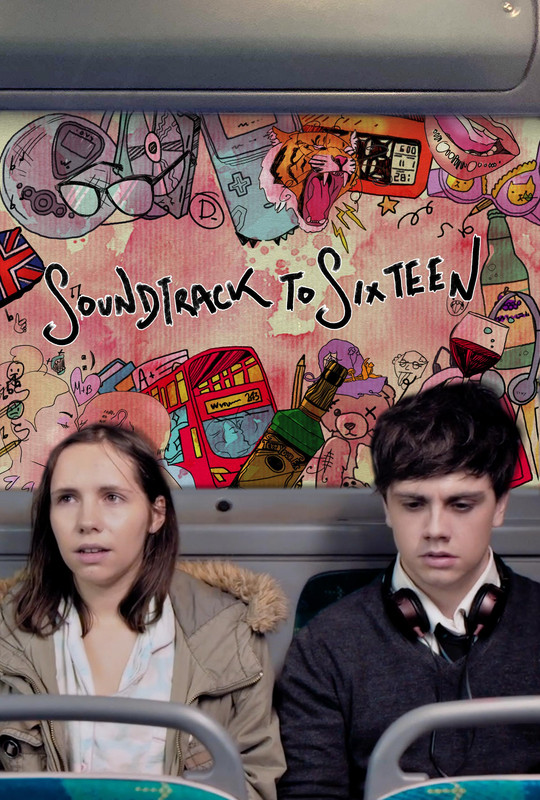
Review: Soundtrack to Sixteen

Dir: Hillary Shakespeare
Soundtrack to Sixteen takes place in London in the early 00s. Maisy (Scarlet Marshall) has never been kissed and worries about fitting in, both with her friends, most of whom have more experience, and with the 'cooler', more popular crowd. Ben (Gino Wilson) is initially okay with being a nerd, but when his grades start to slip he too wants to become more of a part of the popular crowd. When the two meet and get talking, a friendship begins and like many friendships at sixteen, it gets complicated.

I talked, in my introduction to this site, about how coming of age films are about universal experience. That's certainly true of Soundtrack to Sixteen, it's a film all about the messy nature of trying to fit in at that age, of navigating the changes and experiences we go through and of sometimes feeling inadequate or like an outsider because we haven't yet hit a particular milestone. With their screenplay, sisters Anna-Elizabeth and Hillary Shakespeare capture this beautifully. The writing spills over with detail, both in the situations and for me in the language. It's in these details that the film is truly affecting, because it's through them that it pricks most forcefully, thoughtfully and honestly at memory.

For me it was perhaps the voiceovers, relating Maisy and Ben's thoughts, often in opposition to what they actually end up doing or saying, that prompted the most visceral feeling of being thrown back into my own teenage years. The scene in which Maisy and Ben have their first proper conversation on an otherwise empty night bus is especially strong in this regard, with voiceover and dialogue running into each other in ways that are both funny and familiar. This scene though is far from the only one to hit in a personal spot for me. In a justly celebrated sequence in Eighth Grade we see Elsie Fisher at a party, very much on the outside looking in. There are similar moments here and even more so than in that film, they felt ripped from my own experiences and, I'd  wager, those of the filmmakers or their friends. There's never any doubt, from the moment the protagonists literally run into one another in the film's opening sequence, about where Soundtrack to Sixteen is heading, but it always charts its path with a great deal of warmth and wit.

A fairly inexperienced cast paired with a young director making a debut does mean that the film has some rough edges to it, most of which come in the performances. The supporting cast are a mixed bag, seemingly recruited from friends and family, they can sometimes come across a little stilted. Scarlett Marshall turns in a very good performance as Maisy, hitting just the right note of awkwardness while making her dialogue sound like she's saying it for the first time. That latter aspect is where Gino Wilson, though the two share a credible connection, can't quite match his co-lead. A little too often Wilson comes across as delivering lines, rather than just speaking off the top of his head. That said, this has a few moments in which it works to suggest Ben trying to stave off awkwardness by saying something he's rehearsed and perhaps sounded clever in his head - again, I can identify. Ultimately, I was invested in the pair and I still found myself very much identifying with Ben, particularly in a scene in which he and Maisy are studying in the library.

One thing that struck me watching this film is that we tend to talk about realism in film primarily as it relates to bad or difficult things happening to characters. The events of Soundtrack to Sixteen present their share of challenges for its characters and Maisy in particular goes through some tough things in her relationship with the popular girls she so desperately wants to be her friends. Despite that, this is at the end of the day something of a feelgood film and one that lives in to cliche, yet it still feels to me like it should be seen to some degree as a realist piece. I can't imagine anyone - especially a Brit who was young in the early to mid 00s - not finding something that speaks directly to them here.

This is by no means a perfect film, it bears many of the marks of what it is: a low to no budget debut produced with the help of family and friends, it's clearly been through a long process, having been shot in 2013 before premiering in 2019, but that process has allowed the Shakespeare sisters to hone it into a fine calling card and a film that, given the chance, ought to find a welcoming audience who will want to pass it on to their friends.
★★★★