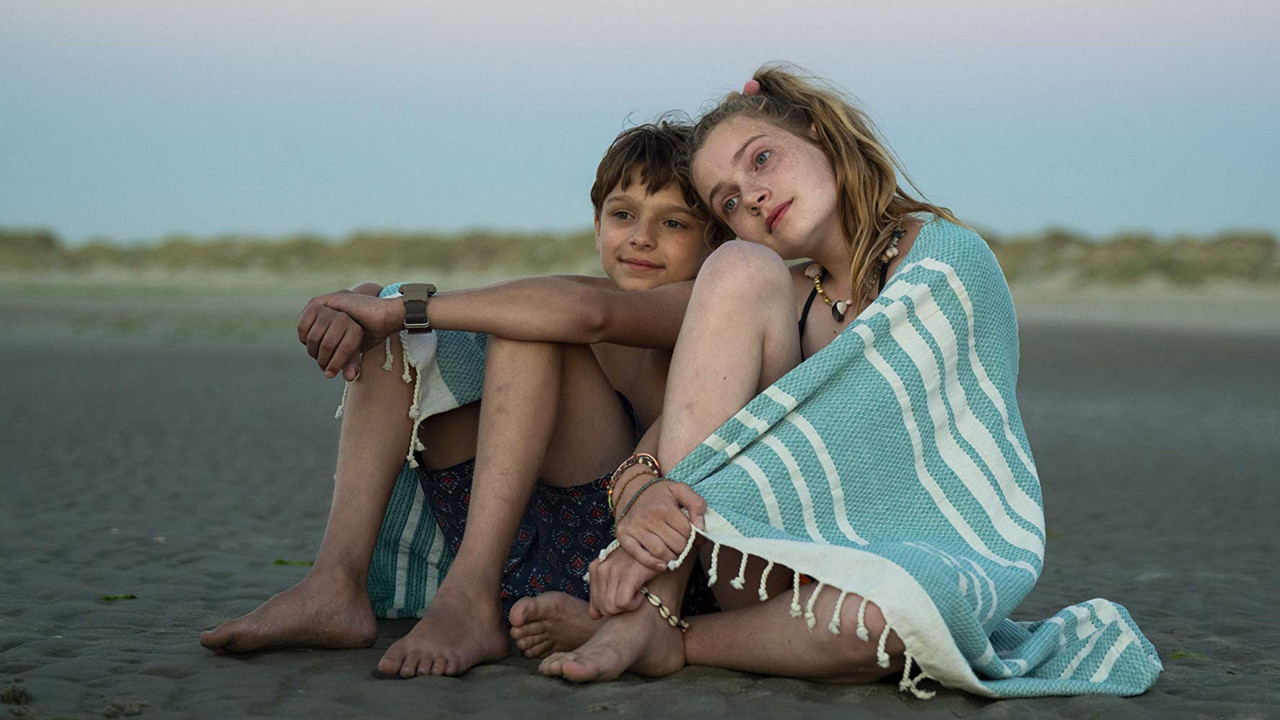
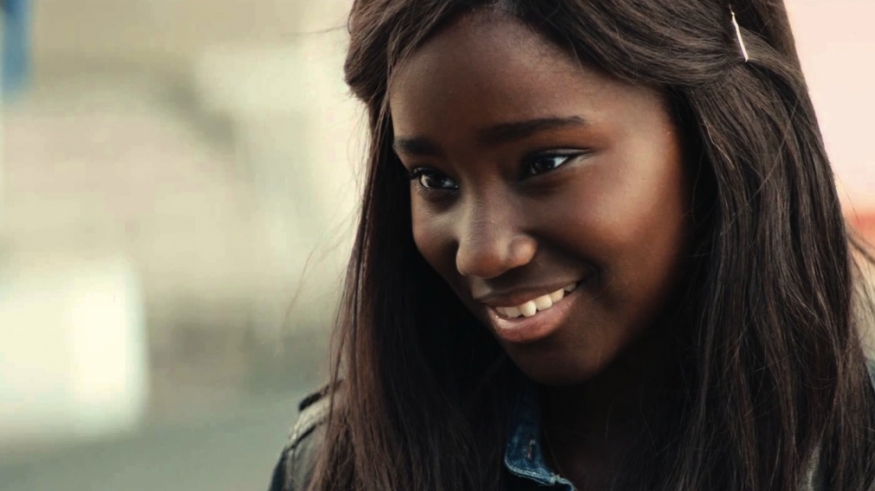
As a critic and as an obsessive film lover, I'm always on the lookout for new talent both in front of and behind the camera. While the past decade or so has thrown up many great new filmmakers, for my money one of the most interesting is Celine Sciamma. With her first three films as a director and two screenplays, Being 17 and My Life as a Courgette, directed by André Téchiné and Claude Barras respectively, she has stuck resolutely to coming of age themes, but always found something fresh to say with each film.
In this series I'll be republishing some of my old reviews (with edits or additions where I feel they're needed) and I thought, with Sciamma's newest film - a step away from coming of age cinema - now finished, it would be a good time to look back at her remarkable first three films.
Water Lilies
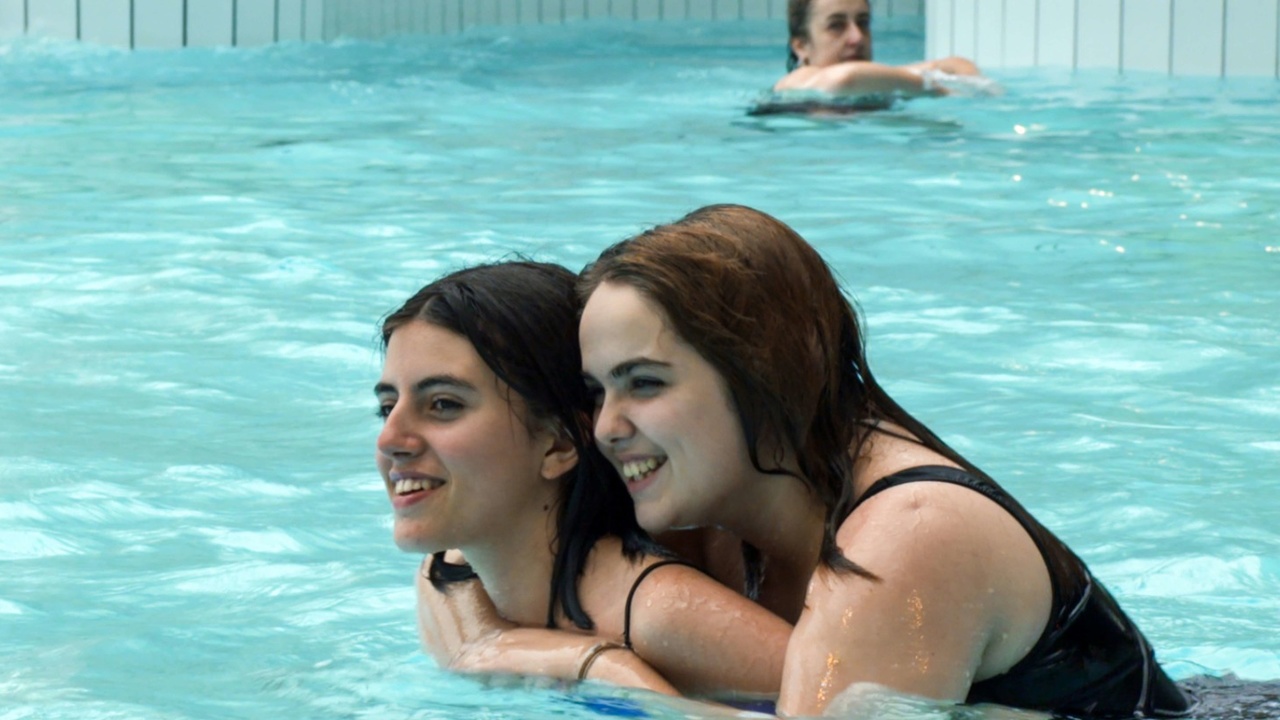
There is something about the way that Europe does films about teenagers, perhaps it's a lack of that quintessentially American optimism, but Europe's teen movies seem to be gritter, more downbeat, and for my money more reflective of what being a teenager tends to be like. Celine Sciamma's debut is a good example, it's a low key story about 14 year old Marie (Pauline Acquart) and her crush on Floriane (Adele Haenel), the star of the local synchronised swimming team. It's a film about unrequited feelings, and about the confusion and pain they provoke.
Sciamma's screenplay is smartly written; intimate and realistic, unafraid to deal with the shallowness and petty cruelties of which teenagers are capable, especially in the way Marie shuts out her awkward friend Anne (Louise Blachere) - whose own crush on Floriane's sometime boyfriend complicates the relationships further. The centre of the film is the relationship between Floriane and Marie, and the clear imbalance in it. It's obvious that Floriane knows how Marie feels about her, perhaps to a greater degree than Marie does, and she uses it to her perceived advantage. In one very difficult scene Floriane asks a very intimate favor of Marie, so that she can have sex with her boyfriend without him knowing that it is her first time.
While the LGBTQ representation is important and clearly makes the film more personal to Sciamma, that's not to say other audiences won't identify. The film is about the dynamics of this relationship and Marie's first painful experience of being, or thinking that she's, in love and those things are not about gender. If this were an American film I suspect it would have ended with Floriane seeing the error of her ways, going to find Marie, declaring her love and kissing her in the middle of some dancefloor. There is indeed a dance floor scene here, but that's not what it's about. In one of the film's best scenes, the girls go to a club and Floriane drags Marie on to the dancefloor, dancing close, drawing her in, almost kissing her, before pulling away in a palpably painful moment. Water Lilies isn't a film about the endings we may have wished for ourselves when we were this age, it's more consistent and more true than that, and the ending Sciamma actually finds is perfect, if more ambiguous.
Celine Sciamma's direction is sensitive, drawing performances of astonishing naturalism from her young cast. Acquart is especially good, and it's a terrible shame that she's done little since (a couple of shorts, a music video and just one feature). For her part, Haenel has built on the promise shown here and in the earlier Les Diables and built a career as one of the best young character actors in European cinema. The visuals have a similar tone to Andrea Arnold's, in that they vacillate between a kitchen sink approach and a more designed and dreamlike feel. A distinctive and promising debut, it left the question of whether Sciamma could deliver on its huge promise with her next film.
★★★★★
Tomboy
Celine Sciamma made a powerful impression on me with her outstanding feature debut Water Lilies. Ever since I came out of that movie I'd been cautiously anticipating her follow up. Whenever a new director makes something as good as Water Lilies there's the question of whether they can follow it up with something equally impressive. Thankfully Tomboy was a confident, convincing affirmative to that question, and a second feature that really put its director on the map.
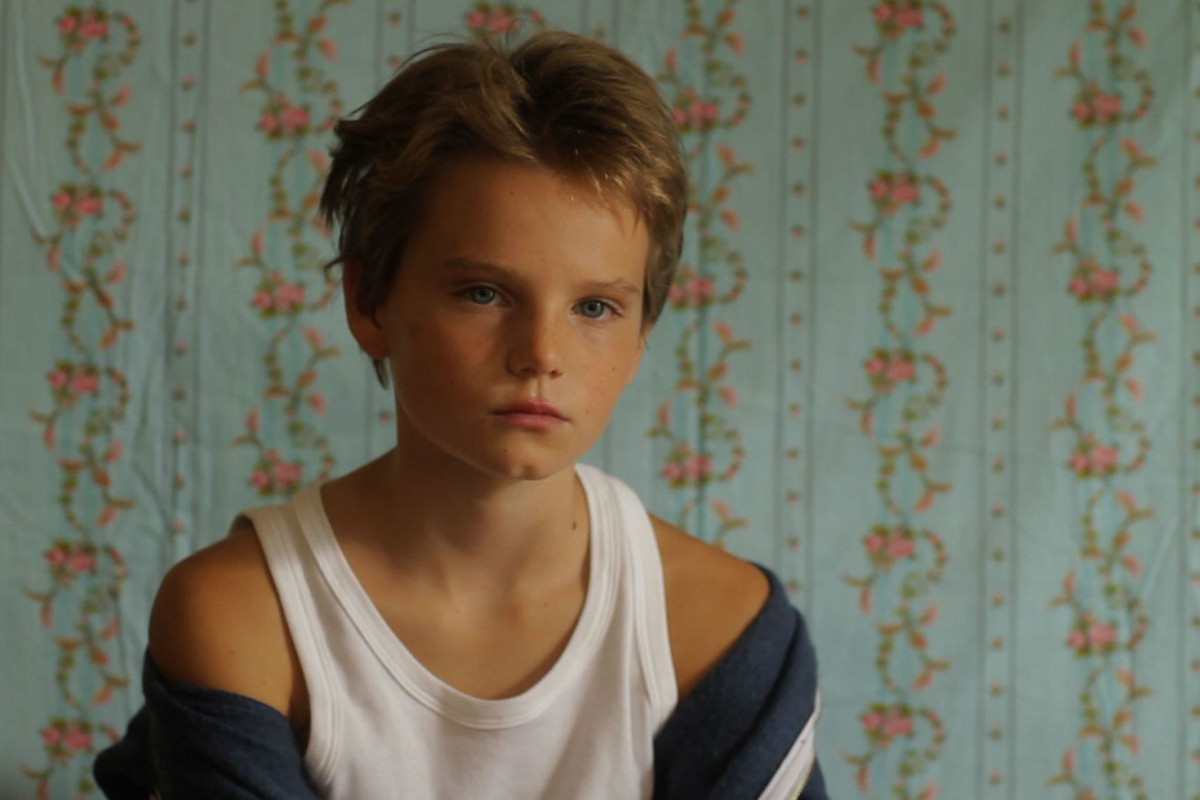
Like Water Lilies, Tomboy concerns itself with a girl's coming of age. Here Sciamma follows Laure (Zoé Héran), a tomboyish ten-year-old who, when asked her name by her new neighbour Lisa (Jeanne Disson), introduces herself as Mikael. 'Mikael' and Lisa become friends, and even share a first kiss, but Laure struggles to keep her secret from her new friend and from her family.
It's refreshing to see a movie these days which, while its focus is on young people, is truly adult. That quality is not defined by swearing, sex and violence, but the way in which it deals with complex and challenging issues of identity, sexuality and the process of growing up. Sciamma never talks down to the audience or moralises about its characters thoughts, feelings or choices. The film sensitively approaches any confusion about Laure/Mikael's pre-teen examination of her gender identity without making an absolute determination about her being a cisgender or trans youth. Tomboy isn't in any way politicized on this point, rather its strength is as an intimate and insightful drama about a young person trying to define themselves.
As befits a film so focused on issues of the body and identity, Tomboy often lingers in close-ups. Shooting on an adapted digital stills camera, with a very shallow depth of field, Sciamma gets right in to the personal space of her characters, especially that of Laure, her six-year-old sister Jeanne (Malonn Lévana), her neighbour, and a new, entirely male group of friends (cast from Zoé Héran's own real life group of friends). Voyeuristic in its intimacy, intelligent compositions present a rather beautiful reality, and Sciamma squares a difficult circle in making a film that feels designed and directed, without allowing any of it to ring false or feel imposed on the actors.
As in Water Lilies, Sciamma's insight into young people coming of age through their interactions is spot on. She understands how to write kids who seem like kids. Even Laure's intelligent and somewhat wily sister (exploiting Laure's lie so that she can hang out with older kids) is written as a smart six-year-old, not as the precocious miniature adults of contemporary mainstream American cinema. Across the ensemble, there's never any sense of conscious performance, especially from the outstanding Zoé Héran and Malonn Lévana. Héran deals assuredly with a complex role, making you wonder as to how she and Sciamma talked about the character, and how her developing mind understood and approached Laure/Mikael's identity. The ease with which she shifts gears, going from unselfconsciously playing with her little sister and her parents, to being more outwardly controlled when she has to fit in with a group of boys, is remarkable. There's a great ease to the way the actors relate, a very real sense of family created between Héran, Lévana and Sophie Cattani and Mathieu Demy as their parents. The same dynamic also applies to the scenes between the children; be it the innocent first stirrings of attraction between Lisa and Mikael, or the games that the larger group of kids play. Always, there's a sense simply of Sciamma observing children being children.
Tomboy is full of memorable scenes and moments, be it the way that Jeanne visibly considers the decision of whether to expose her sister's lie when Lisa comes looking for Mikael, or the lovely scene when Jeanne cuts her sister's hair, completing her tomboy transformation. There's also much to admire in the organic growth of the friendship between Mikael and Lisa, with both charm and thematic interest in a scene in which Lisa puts make up on Mikael.
Like Water Lilies, Tomboy packs real emotional punch, dealing in real and raw emotion. And though the performances are never overly demonstrative, you feel it all. Not quite as satisfying as her debut, Sciamma's follow-up remains one of 2011's best, that last moment of one to watch status that has since been earned and upgraded by equally insightful, well-acted coming of age movies both as a writer and a writer-director.
★★★★
Girlhood
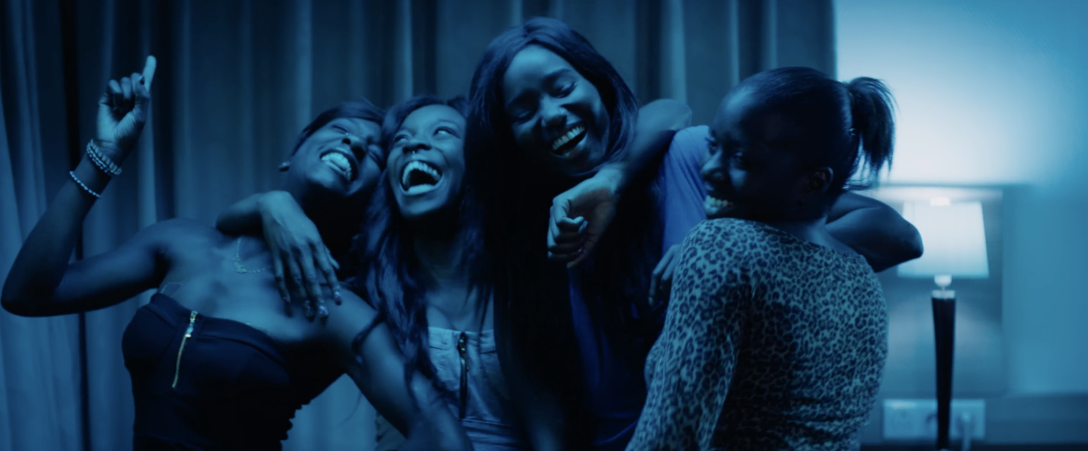
About half an hour into Girlhood, Céline Sciamma visualises the moment that 16-year-old protagonist Marieme (Karidja Touré) finds a temporary sense of belonging. Hanging out for a few weeks with a bad girl posse led by Lady (Assa Sylla), Marieme finds herself in the group but not quite one of the gang, always off to one side while being auditioned as the potential fourth member. In a hotel room, the girls have booked for a party, Marieme lies back as the others lipsync to Rhianna's 'Diamonds'. Halfway through the song, Marieme joins them. The lipsyncing stops and the girls, united, sing out loud. At that moment they're a group that Marieme is now fully part of. A moment that Marieme herself may not consciously recognise, but it's one of many that's powerfully and cinematically communicated in Girlhood.
The film's effective title is more striking than a direct translation of the French 'Bande De Filles', but coming so soon after Richard Linklater's Oscar-winning Boyhood, it somewhat mis-advertises Marieme's story as a feminised take on that film. Both are coming of age stories, but Marieme's experience couldn't be more different from Linklater's 12 years in the life of the suburban every boy. Set in the black community of the Paris banlieues, Marieme falls in with these troublesome teens, largely to get away from a troubled home life with her younger sisters, a single mother, and an abusive older brother. Some of the narrative incidents as she drifts towards and away from the gang, and a boyfriend she has to keep secret from her brother, are familiar, but Sciamma's perceptive screenplay has a sensitive and deep understanding of growing pains, beautifully borne out by the first-time performances of her cast.
This is Sciamma's third film, and it seems to mark a growth in confidence. It still finds the writer-director tackling the subject of a young woman coming of age, but here she engages with a different community and sets aside the LGBTQ issues confronted by characters in 2008's Water Lilies and 2011's Tomboy. Girlhood retains the intimacy of the previous films, but feels like a larger and more cinematic work, right from the opening sequence of an American football game between Marieme and her friends and another local team. It's a high energy beginning, powered by the ground level visuals and the choice of Light Asylum's 'Dark Allies' on the soundtrack. It also feels like the end of a chapter of Marieme's life - one we've not seen - as the lights go out in the stadium and the title appears against a black screen, signalling a new phase.
This idea of phases beginning and ending is key to the film, which unfolds in five acts, each bracketed with a recurring motif. Sciamma ends the first three acts with a shot of Marieme's back, showing her literally turning it on a part of her past. The last two acts make subtle shifts in this pattern, but the lighting and framing is identifiably recurrent, with the camera always settled on Marieme's face in the first frame of each new act. These progressions feel like importantly demarcated chapters in Marieme's life, as Para One's score rises and a black screen marks a definitive act break, allowing a breather from the various anxieties of adolescence and a moment for the audience to reflect on the hard road of maturation for the life unfolding before them.
Marieme's experiences with Lady and their friends Adiatou (Lindsay Karamoh) and Fily (Mariétou Touré) form the bulk of the film. Not all are positive; the girls intimidate other pupils at Marieme's school for money and there are fights between gangs, but Sciamma refrains from judging, presenting these events as part of a complex social picture. Set almost entirely within the black communities of the banlieus, racism only occasionally rears its head, but there are notable incidents. As the girls browse in the mall, a white employee keeps a not too subtle eye on Marieme, assuming she might be out to steal. It's an uncomfortable scene, one the young cast have said rings true in their own lives.
The girls are marginalised sexually as well as racially. Early on, the excited chatter of the group walking home from the American football game slows first to a murmur then to silence as they pass a group of boys. Much later, to survive in the male-oriented world of drug dealing, Marieme largely adopts an outwardly masculine swagger, unsmiling, she has a fierce appearance that presents a tough front. We can perhaps see the roots of this presentational tactic in the way Marieme is treated by her brother Djibril (Cyril Mendy). We get a sense of the fact she's scared of him and what he might do; when Marieme notices her younger sister's physical development and urges her to hide this from Djibril. The full implications of this are never dug into, but it sets a tense tone for any scenes in the household. That tension threatens to explode in one disturbing scene after Marieme returns home from her hotel party, when Djibril hugs his sister, only to tighten his grip and begin choking her. It's easy to see how Marieme's choice in how to present herself later is a way to defuse threats like this before they arise.
Despite going to some dark places, Girlhood does find moments of levity. The girls may appear fierce when facing down another gang in an argument across the platforms of a metro station, but they're also silly, funny, immature teenagers. As much as the Diamonds singalong is about Marieme becoming fully part of the group, it's also a pure moment of escape, of girls simply being girls together. In the lighter-hearted scenes, there are even flashes of broader comedy, such as when the girls go to play crazy golf and Fily gets upset when Adiatou does better than her.
It's rare that these moments of escape have such an uncomplicated purity to them. Sciamma allows the real world to intrude frequently, most notably when the girls, minus Lady, run into an old member of their gang, now a parent to a small child. In this interaction we get a glimpse of the likely future; that the gang will break up and the girls will almost certainly end up in some sort of depressing domesticity, replaced by a younger generation. This is something seen beginning, when Marieme - now as much a leader of the pack as Lady - has to drag her sister away from a younger gang.
Like a mixed up teen, Girlhood has many mood swings, sulky one minute and jubilant the next, but these are knitted together in a way that feels like life itself by the completely natural performances of the four girls, all of them non-actors prior to shooting. Fily and Adiatou are less defined, but Lindsay Karamoh and Mariétou Touré each have their memorable moments. Assa Sylla as Lady and Karidja Touré as Marieme make indelible impressions. Sylla is hugely charismatic, drawing the camera with just a hard stare, and a presence and attitude that marks her out as a natural leader. Initially all front, Lady is confrontational even when she invites Marieme to join the girls on an afternoon in town, but hidden behind that pose is a vulnerability that becomes visible, the more Marieme begins to understand and imitate Lady.
Karidja Touré has the hardest job in the film, mapping Marieme's maturation in the way her persona changes through subtle shifts of confidence; none more so than when Lady renames her 'Vic' (for Victory). Slowly 'Vic' assumes some of Lady's dominance, even fighting battles for her. At other times those internal changes are signalled by external appearance, particularly Marieme's hair. At first, her long, childlike braids are removed and her hair straightened to make her seem womanly and chic before she starts dealing drugs and changing her hair to a harder look that enables her to cope better in that environment. Toure's performance is all the more moving for the emotional details she puts into her many changes of 'costume' that are worn like a girl trying on a new identity.
Girlhood doesn't suggest that growing up is easy, and Sciamma never tries to assure the viewer that everything is going to work out for Marieme, leaving us to make up our own minds about the ending. Karidja Touré has said that she sees Marieme going off into a successful life, but even if one were to feel as hopeful about her future, it's clear that achieving this will be far from simple. Whatever the challenges, based on what we've already seen her go through, Marieme seems ready to step up and meet them, and it's through these experiences that, when the film goes to black for the last time, it feels like she's finally found an identity with which to do just that.
★★★★★