Showing posts with label Coming of Age. Show all posts

18.3.21

Growing Pains @ BFI Flare 2021: My First Summer

Dir: Katie Found
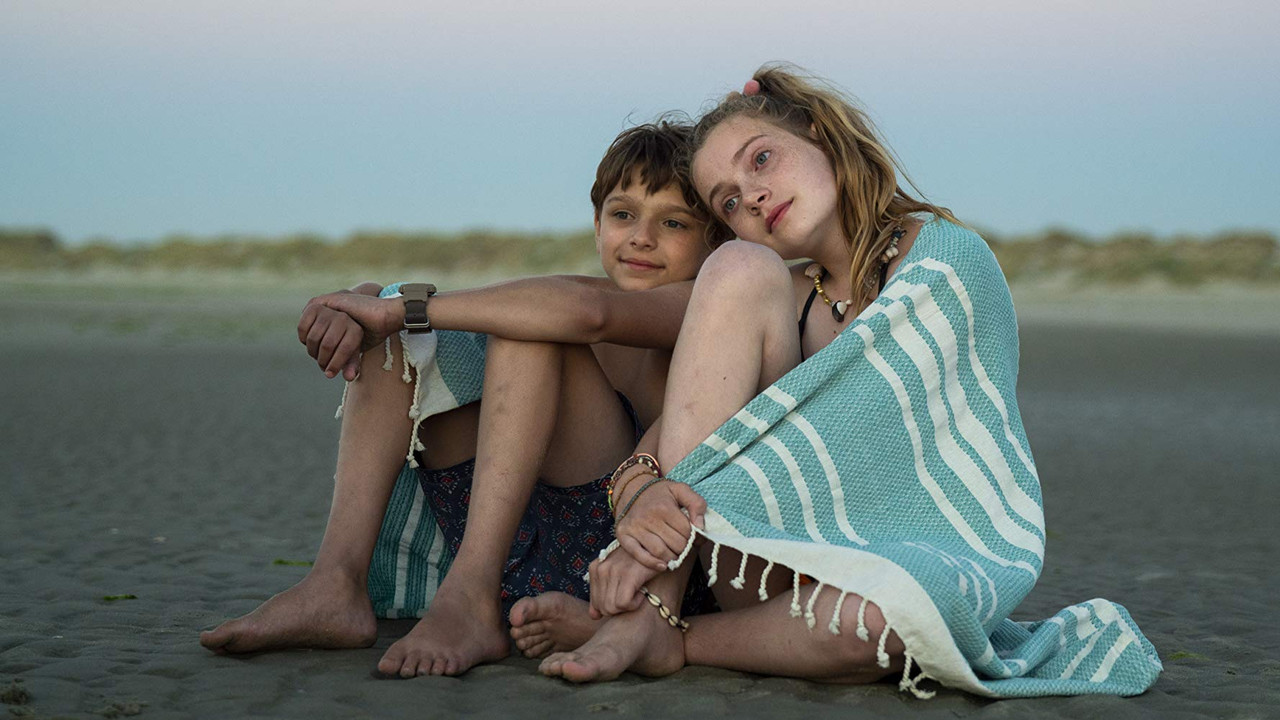
16-year-old Claudia (Markella Kavenagh) and her mother have lived Claudia’s whole life hidden in a cabin in the woods, away from the outside world. After her mother drowns herself, Claudia is surprised when Grace (Maiah Stewardson), who saw the incident, turns up at the cabin. The two develop a friendship that Grace doesn’t seem to have with other teens and that might help bring Claudia out of her hermetically sealed world just a little.

Much of Australian writer/director Katie Found’s feature debut has an almost fairytale feel about it. Claudia’s world, the one Grace first lets herself into and then is granted increasing access to by Claudia, is a place where they seem almost entirely insulated from the outside world. Free from adult influence, they can mess around, eat what they like, and discover themselves. Though both girls are sixteen, they seem younger, Claudia because she has been kept naive about the world by her mother and Grace in the way she dresses all in pink and friendship bracelets, and seems only to eat sweets and chocolate and drink strawberry milk.

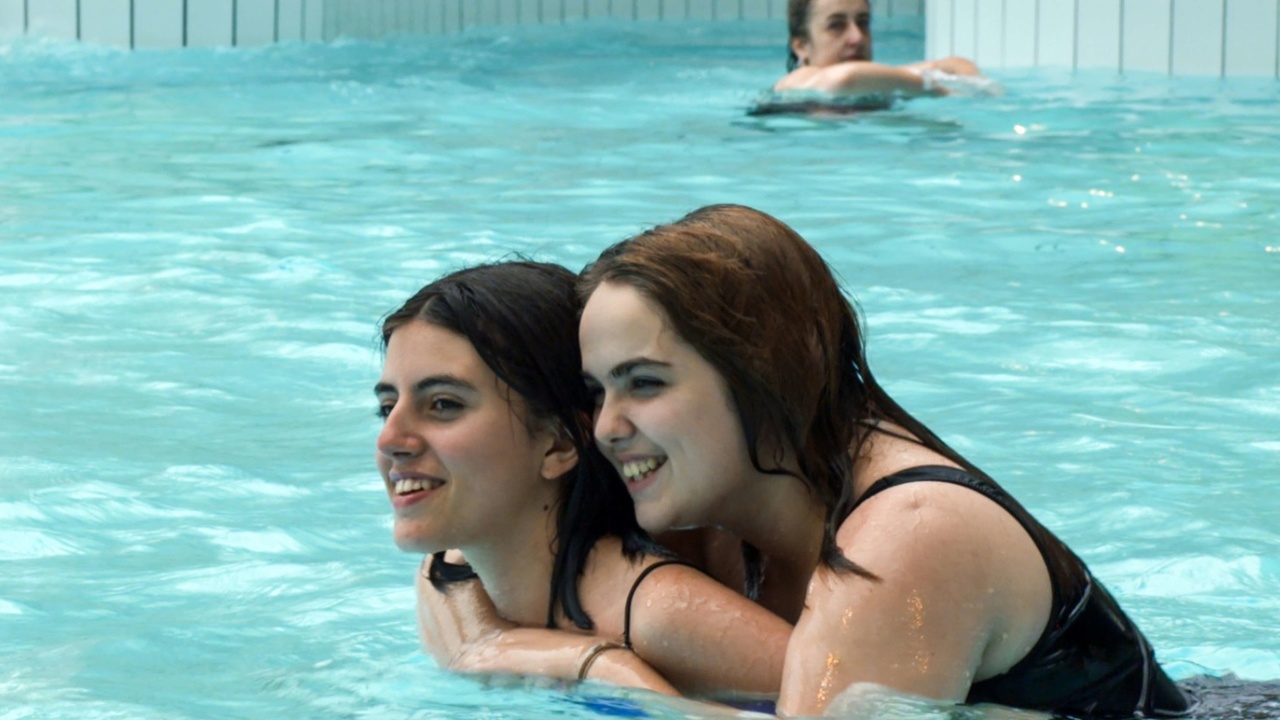
The connection between the two girls is forged in stages, Grace’s friendship drawing Claudia out and helping her deal with her mother’s suicide. In one sweetly sad scene, Grace goes for a swim in a shallow part of the river and tries to coax Claudia in with her. When they go underwater, Claudia panics, but Grace—taking on the role Claudia’s mother should have played—holds her, comforts her and makes her feel safe. There is a tenderness in this moment that we see throughout their relationship and the film as a whole, and which makes the connection between the girls something palpable.

Katie Found’s direction also contributes to the tender and intimate feeling of the film. Many of the interactions between Grace and Claudia are observed primarily in close up, the world a hazy thing surrounding them but not really impacting on them. There are of course breaks from this; the aforementioned river scene, a scene of the two dyeing Claudia’s sheets, which turns into a water fight, but most of the time the focus is tightly on the girls and their ever closer bond. It’s a directorial choice that also focuses us on gaze, especially on the way that Grace looks at Claudia with increasing, sometimes thwarted, desire. An amusing example of this comes when, clearly trying to get Claudia to kiss her, Grace asks her to guess different flavours of lip balm and is subtly, but visibly, frustrated when Claudia initially guesses just from the smell. 

Markella Kavenagh and Maiah Stewardson bring the growing bond between the girls to life with playful performances that portray a great comfort in the connection that Grace and Claudia find in each other, which builds into a convincing romantic chemistry. There is always a little more edge in Stewardson’s performance; a sense that Claudia, naive thanks to her upbringing, could misread something from Grace, but Kavenagh’s gentle performance shows us how quickly Grace begins to understand this.

The real world looms throughout. Cops looking into Claudia’s mother’s suicide talk to Grace several times, but she keeps Claudia secret, first because the idea of leaving the house is terrifying for her (almost the first thing she says to Grace is “If they know I’m here they’ll take me away”) and because Grace wants to keep this little world, and the relationship growing within it, for herself. When the fairytale is punctured it’s traumatic, but it also brings the girls together in a lovely final moment that is at once uncertain and hopeful. 

I’ve been using words like tender, intimate and fairytale to describe My First Summer, but that’s not to say that it’s purely lightweight. There is darkness and emotional pull in Claudia’s shell-shocked response to her mother’s suicide. In one brief sequence, Claudia sees her mother, first as she remembers her and then as she last saw her; soaking wet and going to her death. This is one of a few moments that bring to the surface Maiah Stewardson’s portrayal of that initial emotional disconnect and a more enduring survivor's guilt.

Overall, this is a very promising debut from Katie Found, it has that hazy feel of a memory of a teenage summer, but the mixed emotions provoked by the story and performances always remain in focus.
★★★★

7.3.21

Streaming Suggestion: The Karla Trilogy

Karla og Jonas

I am about to start a new series here at Growing Pains, looking at failed and unfinished YA franchise adaptations. This trilogy would definitely not count for that series. I wasn’t aware of the Karla series of novels by Danish writer, and former supermodel, Renée Toft Simonsen until the film adaptations dropped as part of a glut of Scandinavian content that has recently been added to UK Netflix (with plenty of interesting coming of age films in the mix). I accidentally ended up watching the series backwards, but for the record the three films—all directed by Charlotte Sachs Bostrup—are Karla’s Kabale [2007] (apparently literally a reference to Solitaire, but translated as Karla’s World), Karla og Katrine [2009] and Karla og Jonas [2010].

The series begins with ten-year-old Karla (played throughout the series by Elena Arndt-Jensen) living with her Mother, Rikke (Ellen Hillingsø), stepfather, Leif (Nicolaj Kopernikus) brother, Mads-Morten (Nikolaj Støvring Hansen) and half-brother, who is only ever called Lillebror (Jonathan Werner Juel). It’s almost Christmas and Karla is upset because her mother won’t let Karla and Mads-Morten’s father (Allan Olsen) come to Christmas dinner. After an argument, Karla runs away. The second film explores the relationship between Karla and her school friend Katrine (Nanna Koppel). They used to be best friends, but they’ve drifted apart a little and Karla wants to mend the rift, so she invites Katrine on a family holiday. There’s some tension between them when they meet Jonas (Joshua Berman), who is on holiday with a foster family, but usually lives in a children’s home. In the final film, Karla wants to get back in touch with Jonas, with whom she had her first kiss at the end of the last film, and they end up going on a mission to find his mother.

Something that is often said about the Harry Potter films is that they, as films, grew up with their characters. That’s true to a point, but it’s really more of a gear shift, from the bright and fairly kid-oriented first two entries to the darkness that encroached on Prisoner of Azkaban. I think the Karla series grows particularly well with its main character. Karla is 10 in the first film, 12 in the second and 13 in the third, and the screenplays never make her into a miniature adult. Sometimes this is done in ways that are very typical of movies for and about kids, for instance with a sequence in the first film when Karla’s mother is ill, and Karla struggles with being ‘the grown-up for the day’, failing to keep her brothers from wreaking havoc in the house, but at other times it’s more subtle. In each of the films, but especially the first and third, Karla strikes out without her family. When she runs away in Karla’s World it’s clear how naive and vulnerable she is right from the start, when she spends almost all of her money on an elaborate Christmas ornament, not really thinking about food or shelter. The series isn’t afraid to address adult problems, such as Karla’s dad’s alcoholism; being in a blended family, or why a child might be given up for adoption, from a child’s eye view, but Charlotte Sachs Bostrup pulls off something quietly remarkable. She deals with these themes without ever talking down to her audience (okay, there are a few toilet jokes in the first two films, but they feel quite separate from the more serious side), and she does so without ever making the world feel too dark. 
Karla Og Katrine

For my personal taste, the films get better as they go along, and the way each allows Karla to grow, by making us feel that the experiences of the last film have fed into how she responds to the situations she finds herself in in the next. This is especially clear in Karla and Jonas, where she is clearly more wary of asking for help when she and Jonas, searching for his mother, find themselves stranded in an unfamiliar town overnight, it’s clear that some of the experiences she had running away in Karla’s World influence how she behaves. We can also see this evolution in Elena Arndt-Jensen’s performance; she’s charming and energetic in the first film, but by the time of the third there’s clearly more going on behind what she’s doing, we can see more layers in Karla’s reactions to events.

I don’t want to go into great depth here, because this isn’t a review, just a recommendation. None of these films are great masterpieces of the genre, but they work as coming of age movies collectively as well as individually, and I find that’s rather rare in a series of films. Serious themes are addressed, but in a way that will be suitable for kids of the same age Karla is in each film (one caveat, if you’re especially sensitive about the language your kids hear, occasional S worlds give way to a fair few F bombs in Karla og Jonas). The performances, kids and adults, are excellent, and the family dynamic is so well written that it conjured a lot of memories for me of growing up with step-siblings around frequently. If you’re interested either in coming of age movies or in something intelligent to watch with older children, the Karla series is well worth a look.

1.3.21

Billie Eilish: The World's A Little Blurry [15]

Dir: RJ Cutler
Unless you’ve had your head in the sand for the past three or four years, you’ve heard of Billie Eilish. I was, as ever, a latecomer, only discovering her with the video for When The Party’s Over, but she had been building a dedicated and exponentially expanding fanbase online for some time before that. A key part of her appeal, perhaps especially to her own generation (she is still just 19), is her apparent openness and honesty. She’s been candid, in her music and interviews, about depression, anxiety, her Tourette syndrome, and much more, forging a strong connection with her fanbase. In The World’s A Little Blurry, director RJ Cutler (a prolific documentarian, perhaps best known for The September Issue) takes a long close-up look at Eilish and her family in the time between the writing of her first album and her triumph at her first Grammys.

Perhaps perversely for a film about a hugely successful musician, the parts of The World’s A Little Blurry that dwell on the music are often the least interesting passages of the film, or rather they’re only particularly interesting in how they contribute to what the film really strikes me as; a study of a sometimes vulnerable, ultimately very normal, teenager as she navigates extraordinary circumstances, and deals with the usual teenage bullshit. This is partly because her process with her brother and producer Finneas has been well documented, seeing them actually construct songs is instructive, as are the extensive concert sequences, and some of the behind the scenes looks at the struggles of touring, but these are the elements of the film that we already know and that feel like they could come from any documentary about a touring musician. They are also arguably where Cutler could reduce what is an overindulgent 140-minute running time. 

What’s more interesting is the picture the film builds of Eilish. She and Finneas are both clearly preternaturally talented and you would expect that to manifest in confidence in what they do, we definitely see that in Finneas, especially when he says he aims for every song they write to be the best song they’ve ever written, but it seems not to be the case for Billie, who we often see needing her brother’s encouragement and reassurance. Much of the footage just between Eilish and her family looks as though it was shot by them, or certainly with a very tiny crew, and while of course editing can radically alter perception in documentaries, each moment at least seems honest and unfiltered. Billie and Finneas’ parents emerge as interesting characters here. Many things, as when her Dad gives Billie a ‘be careful’ speech the first time she is about to take her car out on her own, then reminisces about the end of his daughter’s childhood, are very normal everyday parent moments, but obviously, the circumstances are also often almost surreal. Their mother and father are sometimes visibly astonished by what’s happening to their children’s lives, but also seeming to do a good job of taking it in stride and help their daughter process it. Only in one moment do they seem to sugarcoat something, saying “we let you down” when she is upset over negative feedback after a meet and greet she didn’t want to do with record company people, but again there’s insight here; a moment less of managing an artist and more of managing a teenager who had a moment where she was just sick of doing something.

The World’s A Little Blurry is a coming-of-age film of sorts. Not only does it mark milestone birthdays, it uses both Billie’s learning to drive and a relationship (which never seems all that healthy) as throughlines, charting important stages of each of them. The relationship in particular seems to see her grow up. Early on we overhear several cutesy conversations on the phone, later we find Eilish bemoaning the fact that her boyfriend won’t make more time for her and one troubling moment finds her telling her parents that, even though he hurt himself punching a wall, this guy would never hit a person. By the end of the film, we definitely see a person with more perspective and a greater understanding both of what she wants and why neither she nor her boyfriend was getting it in that relationship. It’s a real maturation. I would say we also see maturation in Eilish’s relationship with Justin Bieber. We hear a lot about how, when she was 12, she was so obsessed with him that her mother considered getting her therapy and, in one of the film’s most disarming moments, we see their first meeting, and Eilish very much back to being that little girl, sobbing while Bieber hugs her. By the end though, we find her much more assured and comfortable; touched but not overwhelmed when Bieber calls to congratulate her after the Grammys.

Much as they do in her music, I think Billie Eilish’s fanbase will find much to connect with in The World’s A Little Blurry. Eilish is open about her challenges and problems (an impactful moment shows us a page from her journal written when she was self-harming), and the end of the doesn’t find her having unlocked all the answers, but what her fans have always seemed to find in her is someone whose experiences reflect their own and who can articulate them in a way that speaks powerfully to them. This film, while it’s overlong and restates plenty of things we’ve already heard from and about Eilish, will also give them that.
★★★½

2.3.20

The Shakespeare Sisters on Soundtrack to Sixteen

Almost a year ago, I kicked off this site with a review of a British coming of age film that I had been fortunate enough to see the first public screening of. Soundtrack to Sixteen, the debut from filmmakers Anna-Elizabeth and Hillary Shakespeare (they co-wrote the screenplay and Hillary directed the film) is a charming teen rom-com set in the early 2000s, with a lot of moments that rang very true for me as I was watching the film.

Back in January, I sat down with Anna and Hillary over drinks at a London cinema, and asked them a few questions about Soundtrack to Sixteen, teen movies and their next film, Much Ado.

At the end of this interview you'll also find MY Soundtrack to Sixteen playlist.
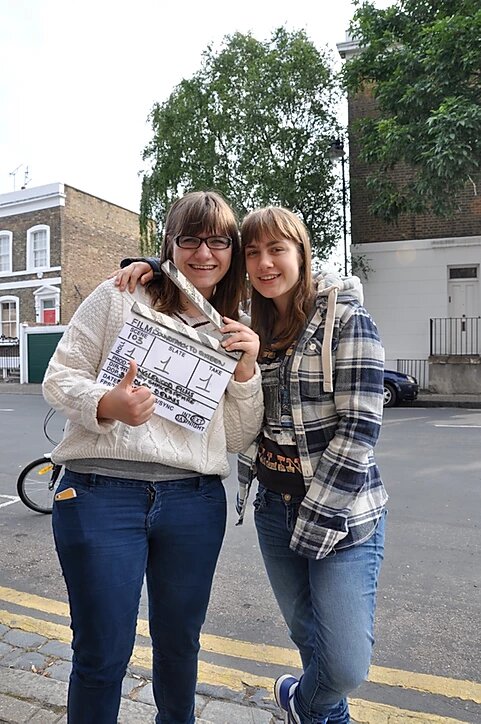
Hillary and Anna-Elizabeth Shakespeare on the set of Soundtrack to Sixteen.

24FPS: I tend to begin at the beginning so, how did you get into film, and was there a moment that you remember saying ‘alright, this is what I want to do’?

Anna: We did it together as a game. When we were growing up we made lots of silly films and when you’re young fantasy is always slightly blurry with [reality], so we always talked about ‘when this happens we’ll make a film company’, the same way you talk about all the other fantasy jobs you might do.

Hillary: We didn’t plan to do it full time until recently. Even with Soundtrack to Sixteen we weren’t really sure that was what we were going to do. I studied physics, and then after I finished I was thinking ‘I don’t know what I’m doing, maybe I want to do film’, and that’s when we made Soundtrack to Sixteen. Then we both went to uni during post-production, so we still weren’t sure. 

24FPS: So making the film was more the catalyst.

Hillary: Yeah, it was like testing it out.

24FPS: Was there something you can identify as the starting point for Soundtrack to Sixteen? What was the first scene you wrote, for example?

Hillary: I guess it was the bus scene. I didn’t actually write it first, but it was the catalyst for it. I was actually on a bus, and I thought that would be a cool title. I was thinking about how when I was little it was sort of my fantasy, because I went to an all girl’s school, that I would just happen on a boy, on a bus [laughs], so that was the first scene I thought of.

Anna: I remember when she came home “I have an idea for a film, it’s called Soundtrack to Sixteen” and I asked “what’s it about”? She was so vague.

Hillary:...Being sixteen

24FPS: Making a teen movie as your first, and to a degree your second film, is that something that came from an interest in the genre, or just where you were in your lives and the resources around you?

Anna: It was kind of the write what you know thing. It’s also a genre we like.

Hillary: Even if they’re bad I quite enjoy them. I guess with people who like horror they just like horror, and I kind of feel that way about coming of age films. So I guess it’s a bit of both, maybe they feed into each other. 

24FPS: Teen films or otherwise, were there any particular influences you felt on the screenplay or the visuals with Soundtrack to Sixteen?

Anna: The two things we were thinking of, that we were watching the most, were My So Called Life and Freaks and Geeks. Both series, but they were both quite influential.

Hillary: My So Called Life especially is quite realistic. She’s portrayed as an annoying teenager, but you’re on her side anyway, so it was that kind of vibe we were going for. In terms of the look, I suppose we did Juno and (500) Days of Summer type things, which we really liked at the time. 

24FPS: You started writing this a while ago, it’s fair to say. What was the writing process between the two of you then, and have you found that it’s shifted all these years later?

Anna: Yeah, it’s definitely different now. The way we did it then was that Hillary wrote everything.

Hillary: [Laughing] That makes it sound like you didn’t write it.

Anna: No, I was going to say and then I came in. We did the vague outline first, then Hillary would go away and write, then we’d talk about scenes, and she’d write them. I did some edits, I’m not sure I wrote any scenes straight off from start to finish, it was more specific lines where I’d say “get this in”. 
Hillary: Because Anna was at school, she was in her last year, and I was on a gap year. I had a whole year to do it, so we’d meet for lunch near her school, discuss what I’d done, and then we’d meet again later when I’d written it.

Anna: It’s quite different from now. We’ve never been able to do that thing where we write physically at the same time, it’s always one of us writes a scene and then swap.

24FPS: There are a couple of scenes in the film that particularly ring true of me at sixteen, which is sad, maybe? There’s the party and the nightbus. So particularly for you Anna, still being at school when you were writing, is there a scene that comes out of that or that feels like that for you?

Anna: Definitely, I think Ben’s story was pretty much what I was going through; thinking that you’re really smart and then suddenly realising that you’re not. I definitely in school, when I was around sixteen, thought I was the shit, basically [laughter]. And then you get cocky and think you don’t need to study. I thought I’m so clever I’ll do five AS Levels and I got… not terrible grades, but pretty bad, I almost failed maths. But my teachers were like ‘oh, we were wrong about you’, not in a mean way, but you know that look. So I was not actually having a rager in the toilets [as Ben does in one scene], but that more than Maisie, who was a bit more Hillary at that age.

Hillary: Yeah, the falling out with people at school and girls being mean, that was more my sixteen year old time and Anna’s was more like the school focused stuff. I think aspects of every scene were taken from reality, that’s kind of the way we write.  

Anna: I think that bullying scene though, that was especially intense on the day.

Hillary: Yeah, there were literally lines taken out of reality for that one. I remember one of the crew asking ‘don’t you think this is a bit unrealistically mean’? I was like, “No, it’s real”.  

24FPS: You’re both credited as writer but Hillary, you’re the credited director, so how did that writer/director dynamic work on set and is that something that’s shifted with Much Ado?

Anna: Back then, I think I had a lot more fun than Hilary actually, because I got to hang out with the actors more like, messing around, but I mostly gave her my notes if I had any, so everything would go through her. She was directing, but sometimes I would notice things. Especially when there was so much going on and the crew was so small it was good to have two pairs of eyes on things, but I would never talk to the actors about their performance.

Hillary: Partly then it was about Anna still being in school, she didn’t have the time commitment. It was both of our vision; we wrote it together and all the post-production we’ve both given all the same feedback, but on the actual shoot, I think you weren’t around as much, you were actually gone for some of it as well. So that’s why we decided I’d direct it, but Much Ado we co-directed all the way through.

24FPS: One thing I really like about the film is that you’ve got a good sense of all the social groups, so how did you manage to first find that in casting and then encourage it on set with the actors?

Anna: I think the first day with the boys was the football day, so that was really good for breaking the ice. There wasn’t much they had to do other than play football badly, which was quite fun as well because they asked if they were supposed to be good at it, but we said ‘no, it’s just average boys playing football badly’. It felt like there was enough time, when I compare it to Much Ado there was a lot less stress, at least for them.

Hillary: I think they just ended up hanging out a lot, the boys especially. The girls had less time together because they were two groups of girls so each individual group had less screen time together, so they had a bit less time to bond.

24FPS: Did you have rehearsal time at all?

Hillary: We only did rehearsals with Gino and Scarlett, the main two. 

Anna: We had Gino there, who plays Ben, to cast the others, so we did test them all against him, cause we cast the main two first and then cast the rest of the groups around them, so that definitely helped.

24FPS: The title has a literal meaning in the film, are the mix CDs something that you did, and what would be on your Soundtrack to Sixteen?

Anna: That’s quite fun. We didn’t do them, they just came up, I think it was Hillary’s idea.

Hillary: It was more like I wished we’d done them.

Anna: But our soundtrack to sixteen, and that’s definitely what we were writing it to, was a lot of Blink 182 and Sum 41 and those teenage bands. Hillary had those Minidiscs and she got, what was the one…?

Hillary: Yeah, I only ever used to listen to basic pop music, cause I didn’t really know how to find music. I used to swap Minidiscs with a friend and one day her brother’s disc got mixed up in them and it was this massive discovery of boys music.
24FPS: The film is set in the noughties, several years before it was shot. So what was it specifically you wanted to capture about that time?

Anna: We definitely wanted it to be set when we were sixteen, so that’s why it’s in the Noughties. We wanted to do it before social media, and there are no proper phones in it, they’re all brick phones.

Hillary: I think the experience of being sixteen must be really different now, and we haven’t really had that. Comparing it to Eighth Grade that's probably more like what it’s like for teenagers now with being constantly online, that wasn’t really part of our teenage experience. I think we wanted to set it in that time because the story we wanted to tell, hopefully it’s relevant, but it’s not exactly what people are going through now.  

24FPS: The film’s taken quite some time to get from shooting to screen. Looking at the good side of that, what do you think has been the most beneficial thing to come out of that extended process for you and for the film?

Anna: We were really good at being savage with it, I think, we knew what needed to go by the time we were cutting it, which was already a few years down the line.

Hillary: We were quite detached by the time we were editing. I think part of the reason it was so slow was that we were learning, it was our first film so every time we had to do something new we had to learn how to do it. That slowed things down, but it was good for us. Also we did degrees in the meantime.

24FPS: Does it play differently for you now?

Anna: It’s hard to tell because it changed so much. The first version… was a bit of a mess. I think I was more nervous about it. I still get nervous every time we watch it with people, I find it so nerve-wracking, watching people watch your thing. 

Hillary: There were a lot of storylines that got cut out. We had a lot more family life and the editor Ben suggested we took the focus off their families and then, it just got a lot better.

24FPS: Something you often notice in coming of age films, the parents just aren’t that important a lot of the time.

Anna: Yeah, we had a whole sub-plot about Ben and his Dad’s relationship. That was in the first edit and it just wasn’t really relevant. In theory, the idea was his Dad cared about him doing well at school, therefore the pressure meant something more, but it actually didn’t really build the pressure, so we just got rid of that whole sub-plot, and it was better.

24FPS: You’re obviously young, female, filmmakers and it’s a time when there’s a lot more focus on women behind the camera. What’s your experience been like in those terms, and would you have any advice for other young women who want to go out and make films?

Hillary: I think we’re in a really good time. For us, we’ve just come into it at the right time. But because I come from a science background, I did find it really hard. I was in a robotics lab where there were barely any girls. I feel like that’s a totally different world.

Anna: Just for context, after she did physics she did computer science, and then AI

Hillary: And those were really male-dominated worlds, where I felt it was really hard to be a girl in that world. By comparison, I think we’ve come into [filmmaking] at such a good time, it feels like a revelation that everyone wants to help. 

Anna: I feel like I need more advice than I can give advice. I guess using what’s available. There are definitely things open right now which are for women in film, so I feel like there’s a lot of opportunity. You might think ‘I don’t want to be sub-categorised into that’, when it becomes a genre - ‘Women in film’ - but then it becomes ‘I’ll just get over myself actually, I want help’. [Laughter].

24FPS: You’ve said there’s a lot of things you learned on Soundtrack to Sixteen, and I assume on Much Ado as well. Of all of those, what are the one or two you most want to carry forward into your next films.

Anna: With Soundtrack to Sixteen we were a lot slower, because I used to think you have to give people loads of time to get good stuff out of them, but then I realised that’s not actually true, you just have to be pushing it 24/7. Obviously we weren’t because we were doing degrees, but I just thought that’s how it would be anyway, and I was wrong there. When things slow down now I know there’s something I can do to push them along. That was quite a big lesson.

Hillary: We’ve learned quite a lot on the sales side, about how difficult it is to sell an indie film. I guess I’d want a higher budget for future films.
24FPS: So your next film, Much Ado, re-setting the play at university. First of all, why that play in that milieu?

Anna: We chose Much Ado because we just love that play so much. The Kenneth Branagh version was our favourite videotape.

Hillary: We had about four videotapes and that was one of them, so we knew it practically by heart by the time we wanted to make it.

Anna: We’d wanted to make it long before. When the Joss Whedon version came out, when we were really quite young, I thought ‘Damn it’, ‘cause I wanted to make the next one.

Hillary: When I was really little the RSC, their home base was the Barbican, and I used to go to all of their plays. Much Ado was the first one, I think, that I really understood. I loved it so much, I made my parents take me back, and my Grandma took me again.

Anna: We’ve been talking about how we’d do it for a long time. When Hillary quit her PHD and we decided we were going to do this, we obviously wanted to finish Soundtrack to Sixteen, but we’d done most of that and were waiting on other people, and we wanted to go into something right away. We’d almost adapted it already, by talking through what we wanted to do for so long, so we were ready to go.

24FPS: You’re keeping it in Shakespearean English?

Anna: Yeah, and it’s still set in the countryside, it’s a university rugby team at a house, so for example the scenes where Benedick is hiding, those are still in the vines, so those bits still have the same vibe. I think a lot of it makes sense, it being really young people because the behaviour is immature and it makes sense when you realise they’re 18 or 19, other than the marriage, which took some work to adapt. It felt like a natural step because it was a genre and a play we knew really well. 

24FPS: I always close interviews with the same question. Not counting your own, what’s the last great movie you saw?

Anna: Marriage Story is the last film we both loved. We saw that at the Austin Film Festival with a big audience, and I cried multiple times.

Hillary: We’ve watched a lot of films lately because we were doing a festival tour and I kind of remembered what it was like to watch films that I loved.

Anna: That seemed a bit obvious, because everyone loves it, so our rogue one… it’s called Jeune Juliette and it’s a French Canadian coming of age film about a girl, she’s overweight and her best friend who’s a girl has a crush on her, but she’s not a lesbian, and she likes a guy who’s a dick.

Hillary: I also liked this coming of age film we saw at Austin Film Festival called Yellow Rose, it’s about a girl whose mum gets deported and she’s trying to hide, but also she’s trying to become a country singer.

24FPS: I haven’t heard of either of those.

Hillary: That’s why we chose them, we wanted to have something you hadn’t heard of.

With that we wrapped up. Many thanks to Anna and Hillary for their time. You can see Soundtrack to Sixteen (which I still highly recommend) on its tour of UK cinemas, check out dates and book tickets at their website. It will be available on VOD soon after that tour concludes.

Finally, as a bonus, here is my Spotify playlist of my Soundtrack to Sixteen. I was that age in 1997 and this list, which is in no order but that in which I thought of the songs, is full of music that was part of the fabric of my life that year (whether I liked the tracks at the time, or indeed now, or not).

3.11.19

Mary Jane's Not A Virgin Anymore

Dir: Sarah Jacobson
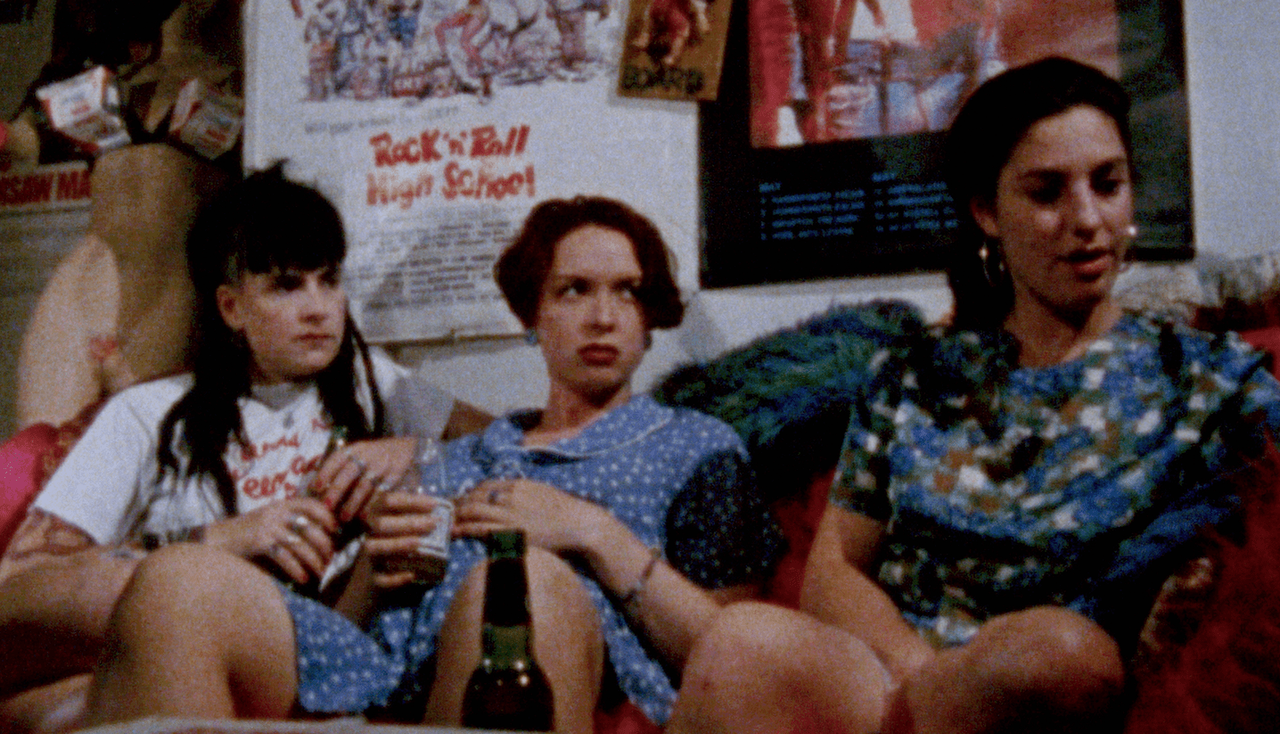
Coming of age cinema is rich and wide in the variety of stories it tells and the way it interprets them, but it can’t be denied that it has a preoccupation with certain kinds of story. One of the most prevalent of these is following teens on the way to the rite of passage that is the loss of their virginity. From the title, you might expect Sarah Jacobson’s only feature film to be one of these, but in this and many other respects, it is more interested in subverting the cliches of coming of age films.

Jacobson’s film skirts expectations from the beginning, as it opens with Jane (Lisa Gerstein) losing her virginity. What the rest of the film is about is something more sophisticated than the many almost quest-based narratives that follow (mostly) boys efforts to have sex for the first time, but a young woman who, while she has now had sex, doesn’t really understand it. 

Much of the film takes place at a local art cinema where Jane and her friends work. We see her trying to sort through her feelings for various male friends, especially Tom (Chris Enright), who is handsome and seems more mature than most of the others, and Ryan (Bwana Spoons), who is nerdy and seems genuinely nice, but somewhat oblivious to Jane’s mild crush on him. 

Jacobson’s writing has a very matter of fact tone to it. This comes through strongly as Jane listens to her friends’ stories of losing their virginity, including one involving a rape. In this case in particular, the frankness is almost disconcerting, these are issues seldom confronted in teen cinema and which as a society we’re still coming to grips with dealing with at all, in media or in law. To see Jacobson and her characters deal with it head on in 1996, and to realise that this scene still feels anomalous, is a real indictment of the cultural conversation and a powerful statement about how viscerally real Mary Jane’s Not A Virgin Anymore can feel. 

This is very much an underground film, shot on Super 8 with largely non-professional actors, and the look and performances can be variable. Many scenes look very dark and the sets underdressed, the budget and the limitations of the film stock showing through. Other scenes are lent an immediacy and intimacy by the limits of Jacobson’s resources, especially a very close up back seat sex scene between Jane and Tom, which brilliantly captures the awkwardness and the desire between them and a montage of Jane and Ryan on a day out together, which has the warmth and carefree feel of a couple of friends messing about for the camera. 

The acting captures the dynamic between late teens/early 20s friends well, with Gerstein and Beth Allen (a punk singer in her only film role) the standouts. The scene in which Allen’s Ericka talks to Jane about masturbation is another notable moment in the film’s dedication to representing sexuality from a female point of view.  For the first hour, the writing captures the aimlessness and alienation the characters sometimes feel, without it weighing heavily on the film. It’s in the third act, when Jacobson injects a plot point that feels designed solely to draw things together with a big, dramatic, event that the writing rings a little false and the main performances falter a bit.

Though it has its flaws, Mary Jane’s Not A Virgin Anymore is not just a very good film, it’s something rarer than that; a film that matters. 23 years after it was made it still feels different within the genre, it remains fierce and defiant, the sound of a clearly identifiable voice who knows exactly what she wants to say and to whom. The tools may not always work in the film’s favour, but the vision is always clear and compelling. This is just one of many reasons that it’s tragic that Sarah Jacobson is no longer with us. Jacobson died of uterine cancer in 2004, aged just 32. Her body of work is sadly small: this sole feature, the short I Was A Teenage Serial Killer, a handful of music videos and a retrospective making of for Ladies and Gentlemen, The Fabulous Stains (a film whose influence is felt throughout Mary Jane). I don’t doubt that there was much more to come from this vital and fascinating voice and it’s great to see that Mary Jane’s Not A Virgin Anymore has now been preserved on a new Blu Ray release, also including I Was A Teenage Serial Killer.
★★★★

18.9.19

Growing Pains @ London Film Festival 2019

For the ninth year in a row, I will be attending the London Film Festival as press, while most of the coverage will be at my other film blog 24FPS, I will be posting my reviews of the wide variety of teen and coming of age films playing at the festival here at Growing Pains. These reviews are of LFF titles viewed on the digital press library. The festival runs from October 2nd - 13th. You'll find ticket links for each film at the end of this post.

My Extraordinary Summer With Tess
Dir: Steven Wouterlood
My Extraordinary Summer With Tess is about a big week in the life of ten-year-old Sam (Sonny Coops Van Utteren). On holiday with his family, he meets the eccentric Tess (Josephine Arendsen) and the two strike up a fast friendship, with Tess asking for Sam’s help when Hugo (Johannes Kienast) and Elise (Terence Schreurs) arrive to stay in the holiday cottage her mother owns. Initially, Sam thinks Tess has a crush on Hugo, but it turns out that she believes he’s the father she’s never met.

For an 81 minute film, My Extraordinary Summer With Tess is busy. As well as the main plot between Sam and Tess there is a focus on Sam’s fatalistic outlook on life - he’s trying to fit practice at being alone in every day, because as the youngest of his family he feels he needs to prepare for when his mother, father and brother are no longer around. This, along with the familial themes of the main story, sounds fairly heavy, but the film is determinedly pitched at an audience the same age as Sam and Tess. In that way, it captures rather well the particular stage many kids are at ten and eleven; grasping the basic concepts of issues like relationships between adults, the challenges of being a parent and the fact their family may not be around forever, but with only a limited understanding of what those things truly mean. This lack of nuance is felt in the characters, but crucially not in the film itself, and that rings true of who these kids are.

Sonny Coops Van Utteren and Josephine Arendsen are both excellent. He as the more serious and melancholy kid, she as a ball of sunshine that, as is often the case, is masking some of her own melancholy. They play off each other well, capturing the way that kids can have their petty disagreements but make up almost instantly (the way Tess plays off the idea of apologising for abandoning Sam on the first day they hung out is especially well written and played). The characterisations are fairly broad - which also extends to the adults - but for the audience this is aimed at, they will work. Kids will likely be charmed by Sam and Tess, but the deeper themes of family, friendship and how both are to some degree chosen and both are to be cherished will resonate, because they are pitched at the right level.

On the whole, the film is energetic, sweet and bright. What it does lack is context, we get little sense of who Sam and Tess are outside this very contained space of the week in which they are hanging out, and the film is a little simplistic when it comes to the complexity of the issues surrounding Hugo, which it could probably have unfolded in more detail while still being suitable for a young audience. Overall though, this is a charmer and another argument that LFF’s Family programme should get more coverage.
★★★½

Adolescents
Dir: Sébastien Lifshitz
Being a teenager is an experience that is at once commonplace and singular. That seems to be what Sébastien Lifshitz is trying to explore with Adolescents, which follows Anaïs and Emma from the ages of 13 to 18. Though from different backgrounds Anaïs very working class and Emma clearly more upper middle class, the two are initially close friends. We follow them as they take different routes, Anaïs vocational high school and Emma a more academic track. Across 135 minutes, Lifshitz’ camera observes as they go through the regular trials and tribulations of their teen years, among them boys, exams and difficult relationships with family.

Initially, the film is very engaging. Lifshitz seems to take a Fred Wiseman type approach, documenting without (at least as far as we hear) asking questions or providing contextualising narration or captions. The things we see are very normal but extremely vivid; the girls chatting about which boys they like, sulky teen girls arguing with their parents, kids horsing around in class. It’s all very familiar. If you can cast your mind back to being a teenager, there’s every likelihood that you’ll find yourself cast back to a similar moment in your own life.

There is some attempt to structure the film around political events (Charlie Hebdo, the Bataclan and the election between Marine LePen and Emmanuel Macron are all seen), but only the election draws much from either Anaïs or Emma and because Lifshitz isn’t engaging from behind the camera, what discussion there is ends up brief and surface level. This gets to the larger problem with the film. After the first act, we’ve already been through most of the types of scene we’ll see, and much of the last 100 or so minutes of the film feels repetitious. Yes, events intervene, especially in Anaïs’ life, but again, because the director doesn’t discuss anything with his subjects and, left to their own devices, they’re not expressing much in our direction, the insight feels lacking.

There are powerful moments in the second half of the film, many of them centering on Anaïs’ relationship with her sickly mother, but equally there is so  much we hear about (notably six weeks in which Anaïs had to take care of her younger siblings after her mother had a breakdown), which promise to be much more compelling and insightful than yet another scene of Emma being stroppy with her mother over homework. Looking at this film next to the great documentary about teenagers coming of age - Hoop Dreams - Adolescents’ flaws become crystal clear. While Hoop Dreams managed to explore its protagonists lives while also crystallising issues of class and family, this film always feels hazy. It has the ambition to delve into those same themes, but by stepping back so much it never makes them a strong throughline.

The film’s final scenes raise one last issue. For the second half of the film, we have never seen Anaïs and Emma interact. This makes sense; they move in different groups, they have different ambitions, people grow apart. The last moments see them together, seemingly as warm and close as ever. Is this their first meeting for years or have they remained friends off camera? We never know, because when they aren’t together they never mention each other and here that is never clarified, either by the film or by them. This raises the spectre of a much more contrived narrative than Lifshitz seems to want to suggest he’s constructing here, and for me that undermines the film even further.

I can see, and would likely love, the film Adolescents wants to be, but for me the collection of footage never coalesced into anything as thoughtful or insightful as its ambitions. 
★★


23.7.19

Streaming Suggetions: Malibu Rescue

Dir: Savage Steve Holland
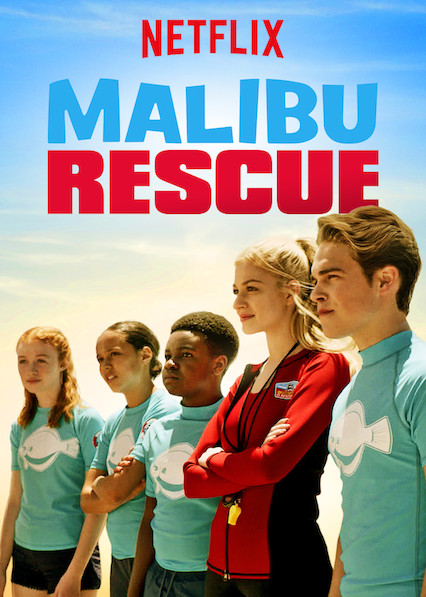
Tyler (Ricardo Hurtado) is continuously in trouble at school and his stepfather (Jeff Meacham) is so sick of it that he makes Tyler spend the summer taking a course to become a junior rescuer down at Malibu beach. After a while, Tyler discovers that the head of the programme (Ian Ziering) doesn’t want him or the rest of his team there, because they don’t live near the beach. Along with their scatty instructor Dylan (Jackie R. Jacobson), Tyler and his new friends decide that they are going to beat the top team of recruits in the final test.

Technically a pilot for a new Netflix series, but uploaded there as a movie separate from the series as a whole, Malibu Rescue wouldn’t be something I’d have addressed (or probably even watched) but for the fact it’s directed by Savage Steve Holland, who is one of the true lost talents of 80s cinema. Holland’s three teen movies of the 80s: Better Off Dead, One Crazy Summer and How I Got Into College are all anarchic comedies that, though they fit perfectly into the decade’s cycle of teen cinema, have a very particular tone and humour. For 30 years now, Holland has been largely lost to TV, working on series like Lizzie McGurie, Zoey 101 and Fairly Odd Parents, his only non TV project since the early 90s has been the direct to video Legally Blondes, the Reese Witherspoonless third in the series. I didn’t see any of those projects (they clearly weren’t aimed at me), but Malibu Rescue suggests that the spirit of his features has never quite left Holland.

Like Holland’s other recent projects, Malibu Rescue is definitely targeted at children. It’s simplistic, with stereotypically sneering bad guys (Ziering, and JT Neal as Brody, the leader of the elite team, the Dogfish), simple morals about family of various stripes and a very much expected ending in which everyone who deserves it gets their comeuppance and each of the misfits on Tyler’s team gets to show how what makes them weird is also one of their strengths. This isn’t a bad thing, it’s just the nature of the film, and I suspect that this one will appeal to adults a bit more than most projects of its ilk because of the weirdness that Holland brings to it.

Fans will recognise some signature aspects of Holland’s work here, albeit somewhat watered down. The Momhacks vlogs that we see Tyler’s mother (Catia Ojeda) making call to mind a significantly less crazy, but still pretty funny, version of Kim Darby’s comepletely spaced out turn as Lane’s mom in Better Off Dead. Some of the running gags also hit on this tone, a little boy called Jeffy (Michael Mourra) who keeps bothering Tyler always turns up a laugh and even if the gags are simple slapstick, Holland’s timing keeps them fresh. Also straight out of Holland’s earlier work is a running gag with a deliberately poorly animated stop motion crab.

At just 69 minutes, the film never has time to let the pace flag, and it would definitely benefit from developing its characters more. The villains get very little to do, I don’t think Brody’s two assistants even get a line between them and even for a film like this, Brody himself is underwritten (though JT Neal plays the dumb jock stereotype well and gets a few good laughs out of some fairly obvious gags). Tyler’s team, the Flounders, get a bit more development, but everything feels as though it’s on fast forward, with Tyler’s shift from trying to get thrown out of the programme to embracing it coming very quickly. The Flounders basically get one or two personality traits each, with Dylan being a klutz because she’s lacking confidence, Lizzie (Abby Donnelly) being obsessed with first aid, Gina (Brianna Yde) being the serious one, but also obviously hiding something and Eric (Alkoya Bruson) being enthusiastic, supportive of his new friends, and a little bit needy. 

The cast commits and brings energy and warmth to their performances, you buy them as a group and hopefully that dynamic will develop in the series that follows this film, because there is plenty of room to open these characters up. For me, Abby Donnelly is a standout, nailing one particularly offbeat and surprisingly dark gag, while Jackie R. Jacobson has fun with a cliche character and, happily, isn’t paired off with anyone, allowing her to be defined by her journey to finding her confidence in training these kids (who are only a few years her junior). It’s a pleasure to see Curtis Armstrong, something of a trademark for Holland, pop up as a weirdly cheerful janitor. They don’t share a name, but there’s still a part of me that could see this being his Better Off Dead character later in life. On a similar note, Vooch (Jeremy Howard), the bus driver who gets the kids to the beach each day, is basically the character Armstrong would have been in his younger days.

Malibu Rescue is no masterpiece, and while because of the age of its characters it counts as a teen movie, the rushed running time means that it touches only lightly on coming of age themes. It's also not quite a fully formed work from Savage Steve Holland, but it’s always amiable and enjoyable, and the bits of Holland’s personality that slip through made me smile and laugh more than many Hollywood comedies of late. I hope this film and the series take off on Netflix, not just because I enjoyed it, but because its success would make, after 30 years, a new feature with Savage Steve Holland at full strength, a real possibility.
★★★☆☆

18.7.19

The 90s: Drive Me Crazy and Drop Dead Gorgeous

At the moment and into August, the BFI are having a season of films from the 90s, and while it doesn't focus on them, there are teen movie screenings and a quiz being held by the excellent teen movie screening group Forever Young Film Club.

With that in mind, I thought I'd turn my focus on the teen movies of the decade I was a teenager myself, both so I can revise for the quiz, and so I can try to look at them from a fresh angle with at least two decades' distance.

Drive Me Crazy [1999]
Dir: John Schultz
There are worse films than Drive Me Crazy in the 90s cycle of US teen movies, but perhaps none more basic, less inspired, blander or less interesting.

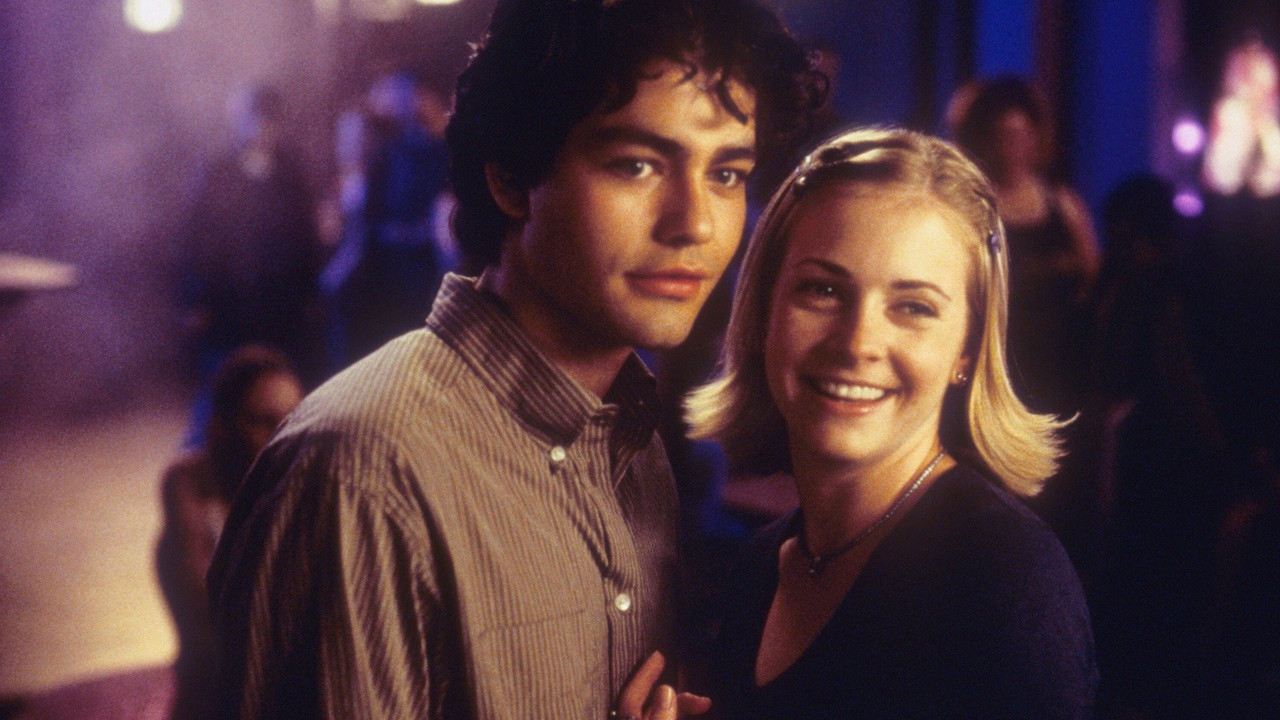
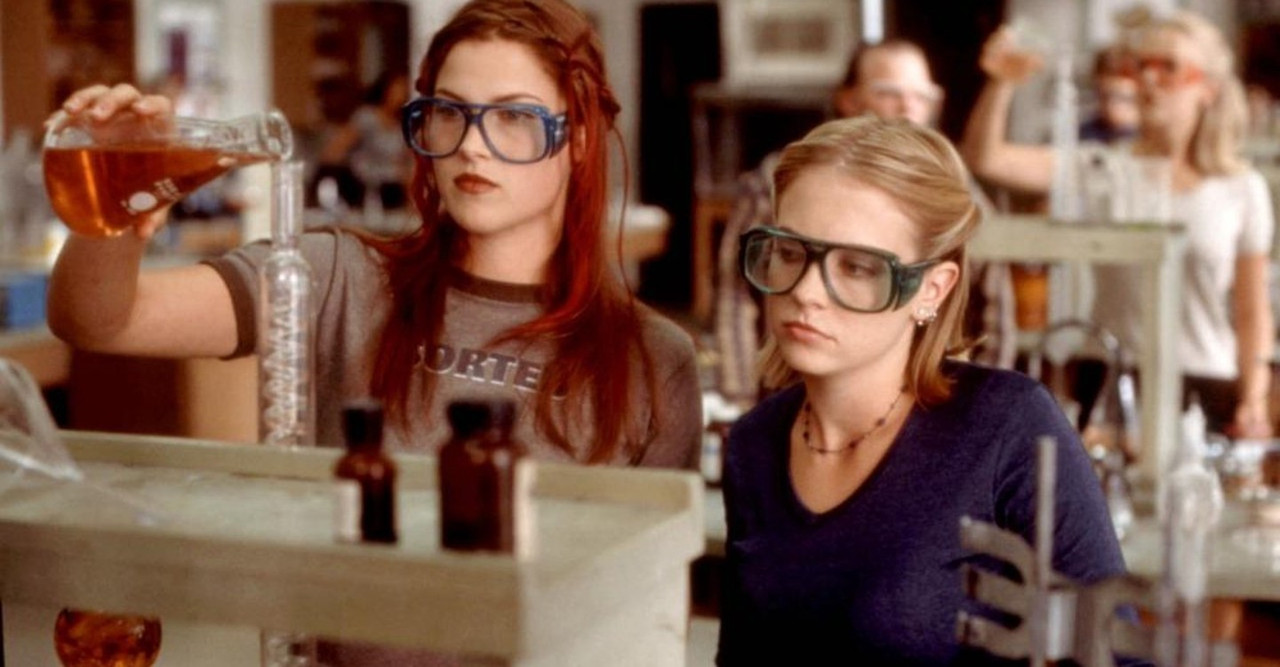
Nicole (Melissa Joan Hart) and Chase (Adrian Grenier) have lived next door to each other for years, they used to be friends but now they run in different circles. Chase is a rebel, pulling pranks with anti-social friends, while Nicole is one of the more popular girls in school, head of the committee putting together the students' celebrations for the centenary of their school. However, when Chase is dumped by his socially conscious girlfriend (Ali Larter) and Nicole doesn't get the invite to the prom she expects from her crush Brad (Gabriel Carpenter), they decide to feign a relationship to make the respective objects of their affection jealous.

You may never have watched Drive Me Crazy (I wouldn't blame you), but you have seen this film before. As the summary above suggests, this is the most generic of teen rom coms. We know from the very first moment exactly how Nicole and Chase will end up, along with most of the beats that will get them there. Sadly, the experience of watching this all unfold is a dreary one. A film can get by being super generic if it's executed notably well (The DUFF is a good recent example), unfortunately, this one isn't. There's never any great clarity in the writing, Nicole is clearly supposed to be the nerdy type, super into school spirit and hyper organised, but that only ever comes across in the scenes where things like her having budget figures to hand or making over Chase by giving his hair a light trim are plot points, neither the script nor Melissa Joan Hart embed this in her character. The same is true for Grenier. In a better film, we might see the contrast between his own view of himself as a rebel and the fact he's actually something of an outcast, content to sit largely outside the high school experience with his friends (Kris Park and Mark Webber) who are much more outwardly geeky.

There are some bright spots in the film. While Grenier is a charisma vacuum, Melissa Joan Hart is well cast and brings the same lightness she did to Clarissa Explains It All (I was a bit too old for Sabrina). One interesting aspect of her casting is that the film, for all its other adherence to cliche, evades it by playing Nicole as neither the super hot queen bee of the school nor the dowdy bespectacled girl waiting for some guy to realise she's beautiful. It's unfortunate that, in falling between these stalls, the screenplay then forgets to give her a consistent personality. Some of the supporting cast and B stories work better than the very bland and entirely stakeless main narrative. Susan May Pratt has fun, essentially playing a bitchy variation on her best friend character from 10 Things I Hate About You, and the side story about Chase's friend Designated Dave (Webber), while a fairly obvious triumph of the nerd trope, works quite well.

Music was always a key part of 90s teen movies, here, while the presence of The Donnas on the soundtrack and in the film is welcome, the rest of the soundtrack is full of landfill indie and pop. The only otherwise notable aspect of the soundtrack is that, though it's in the film for roughly three seconds, the title was changed from Next to You (which sounds so much like a Nicholas Sparks movie I had to google to check if it was one) to tie in with Britney Spears' Crazy. 

Sadly it's the romance that is front and centre of the film that pulls it down. We've seen the conceit of two people pretending to be together and then 'unexpectedly' falling for each other many times, and whether it works all depends on the chemistry. I don't see it between Melissa Joan Hart and Adrian Grenier, their romance feels forced and yet that doesn't generate any tension in the story, even early on when the characters might be feeling conflicted about it. The background stories for each of them are standard issue and though we're told at one point that the death of his mother a few years before had a deep effect on Chase, this is another thing we don't feel from Grenier's performance.

The genre would hit several highs in 1999, but most of Drive Me Crazy feels like watching the post-Clueless teen movie cycle run out of inspiration in real time.
★★☆☆☆

Drop Dead Gorgeous [1999]
Dir: Michael Patrick Jann
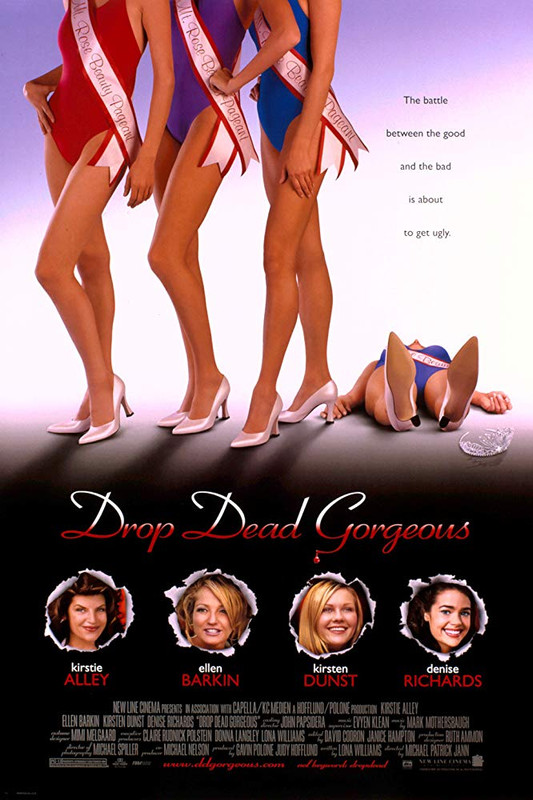
The mockumentary has been a staple comedy style in film and television for some time, but it's clear that all of them look, ultimately, to the same towering example: This is Spinal Tap. With Drop Dead Gorgeous, writer Lona Williams and director Michael Patrick Jann take the Tap style and turn the focus on a teen beauty pageant in Minnesota, where things turn deadly as rivalries develop between the girls and it becomes clear that someone will go as far as murder to make sure the 'right' person wins.

The main rivalry is between Kirsten Dunst as Amber, a sunny seventeen-year-old who idolises Diane Sawyer and lives in a trailer park with her mother (Ellen Barkin, who is hilarious) and Denise Richards as Becky, the daughter of Gladys (Kirstie Alley), who runs the pageant and won the year she was seventeen. Because of the style of the film, Lona Williams' screenplay largely gets away with being more a series of linked sketches than an overarching narrative, yes, there's the thread of several of the contestants being killed in 'accidents', but these are never dealt with as more than outrageous gags. Equally, while we know she wants to be like Diane Sawyer, there's not that much drive to Amber's newscasting ambitions, everything is ultimately fodder for gags. It works because the gags mostly stick.

Dunst's guileless performance underplays most of her jokes, which makes them funnier than they would be if Amber knew she was being amusing. Denise Richards' performance is almost the flipside of this; she's playing a girl whose mother has clearly trained her to sell herself at every opportunity, and she's always playing to the camera. Richards isn't the greatest actress in the world but despite being more than ten years older than Dunst she's well cast here; the fact she doesn't look seventeen works for how Becky wants to present herself. Beyond that, Richards commits, never more so than in the talent show aspect of the pageant, her act for which just has to be seen.

Several of the other girls in the pageant are worth noting. Looking back on her films from the late 90s and early 2000s, it's clear that we lost a terrific screen presence in Brittany Murphy, and she's good fun in a small part here. The same goes for Amy Adams, making her debut here in a role that might have seen her break out sooner, had the film been a hit. Not in the pageant, but stealing scenes as the anorexic girl who won last year, Alexandra Holden is very funny in what's clearly the film's most (perhaps only) pointed piece of satire. A couple of jokes revolving around the judging panel, one of whom is a bit TOO into the young girls and another who has to look after his brother with learning disabilities, haven't aged well, but most of the other gags still feel as fresh as they did 20 years ago.

The film builds quite quickly to the pageant itself, and this is where it goes off the rails a little. Once the big event the film has been building to is over, and the very funny aftermath of it seems to have wrapped up the various story strands, Williams and Jann flail a bit for the last fifteen or twenty minutes of the film. Most of the jokes still hit, but with all the characters we've been following except Amber and Alison Janney as her mother's neighbour from the trailer park now largely out of the film, it feels almost as if we're starting another abbreviated episode after a TV show's strong pilot.

Drop Dead Gorgeous isn't quite a lost classic, indeed it might be the weakest of Kirsten Dunst's three teen movies of 1999, but for the most part it is still fresh and funny and it's worth seeing for a cast who are not just having a ball here, but would largely go on to bigger and often better things.
★★★☆☆

17.4.19

From the Archives: Celine Sciamma's Coming of Age Trilogy

As a critic and as an obsessive film lover, I'm always on the lookout for new talent both in front of and behind the camera. While the past decade or so has thrown up many great new filmmakers, for my money one of the most interesting is Celine Sciamma. With her first three films as a director and two screenplays, Being 17 and My Life as a Courgette, directed by André Téchiné and Claude Barras respectively, she has stuck resolutely to coming of age themes, but always found something fresh to say with each film.

In this series I'll be republishing some of my old reviews (with edits or additions where I feel they're needed) and I thought, with Sciamma's newest film - a step away from coming of age cinema - now finished, it would be a good time to look back at her remarkable first three films.

Water Lilies
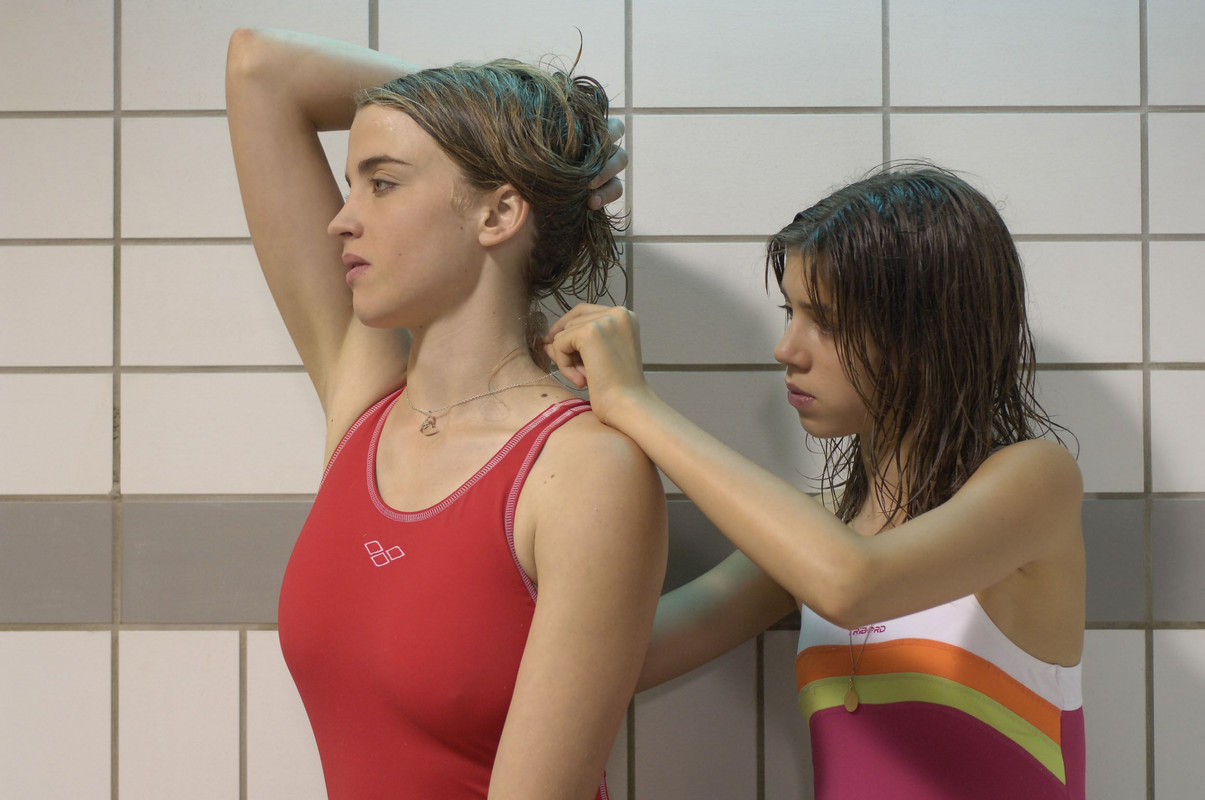
There is something about the way that Europe does films about teenagers, perhaps it's a lack of that quintessentially American optimism, but Europe's teen movies seem to be gritter, more downbeat, and for my money more reflective of what being a teenager tends to be like. Celine Sciamma's debut is a good example, it's a low key story about 14 year old Marie (Pauline Acquart) and her crush on Floriane (Adele Haenel), the star of the local synchronised swimming team. It's a film about unrequited feelings, and about the confusion and pain they provoke.

Sciamma's screenplay is smartly written; intimate and realistic, unafraid to deal with the shallowness and petty cruelties of which teenagers are capable, especially in the way Marie shuts out her awkward friend Anne (Louise Blachere) - whose own crush on Floriane's sometime boyfriend complicates the relationships further. The centre of the film is the relationship between Floriane and Marie, and the clear imbalance in it. It's obvious that Floriane knows how Marie feels about her, perhaps to a greater degree than Marie does, and she uses it to her perceived advantage. In one very difficult scene Floriane asks a very intimate favor of Marie, so that she can have sex with her boyfriend without him knowing that it is her first time.

While the LGBTQ representation is important and clearly makes the film more personal to Sciamma, that's not to say other audiences won't identify. The film is about the dynamics of this relationship and Marie's first painful experience of being, or thinking that she's, in love and those things are not about gender. If this were an American film I suspect it would have ended with Floriane seeing the error of her ways, going to find Marie, declaring her love and kissing her in the middle of some dancefloor. There is indeed a dance floor scene here, but that's not what it's about. In one of the film's best scenes, the girls go to a club and Floriane drags Marie on to the dancefloor, dancing close, drawing her in, almost kissing her, before pulling away in a palpably painful moment. Water Lilies isn't a film about the endings we may have wished for ourselves when we were this age, it's more consistent and more true than that, and the ending Sciamma actually finds is perfect, if more ambiguous.

Celine Sciamma's direction is sensitive, drawing performances of astonishing naturalism from her young cast. Acquart is especially good, and it's a terrible shame that she's done little since (a couple of shorts, a music video and just one feature). For her part, Haenel has built on the promise shown here and in the earlier Les Diables and built a career as one of the best young character actors in European cinema. The visuals have a similar tone to Andrea Arnold's, in that they vacillate between a kitchen sink approach and a more designed and dreamlike feel. A distinctive and promising debut, it left the question of whether Sciamma could deliver on its huge promise with her next film.
★★★★★

Tomboy
Celine Sciamma made a powerful impression on me with her outstanding feature debut Water Lilies. Ever since I came out of that movie I'd been cautiously anticipating her follow up. Whenever a new director makes something as good as Water Lilies there's the question of whether they can follow it up with something equally impressive. Thankfully Tomboy was a confident, convincing affirmative to that question, and a second feature that really put its director on the map.

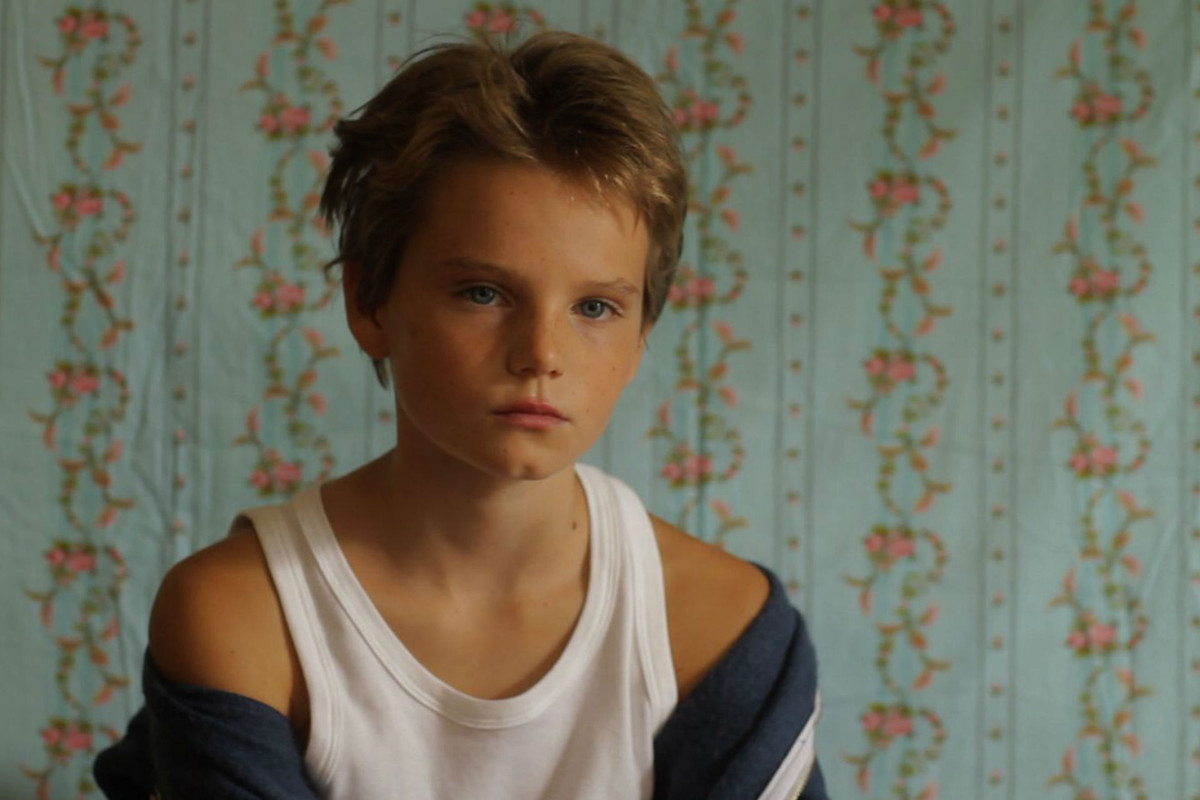
Like Water Lilies, Tomboy concerns itself with a girl's coming of age. Here Sciamma follows Laure (Zoé Héran), a tomboyish ten-year-old who, when asked her name by her new neighbour Lisa (Jeanne Disson), introduces herself as Mikael. 'Mikael' and Lisa become friends, and even share a first kiss, but Laure struggles to keep her secret from her new friend and from her family.

It's refreshing to see a movie these days which, while its focus is on young people, is truly adult. That quality is not defined by swearing, sex and violence, but the way in which it deals with complex and challenging issues of identity, sexuality and the process of growing up. Sciamma never talks down to the audience or moralises about its characters thoughts, feelings or choices. The film sensitively approaches any confusion about Laure/Mikael's pre-teen examination of her gender identity without making an absolute determination about her being a cisgender or trans youth. Tomboy isn't in any way politicized on this point, rather its strength is as an intimate and insightful drama about a young person trying to define themselves.

As befits a film so focused on issues of the body and identity, Tomboy often lingers in close-ups. Shooting on an adapted digital stills camera, with a very shallow depth of field, Sciamma gets right in to the personal space of her characters, especially that of Laure, her six-year-old sister Jeanne (Malonn Lévana), her neighbour, and a new, entirely male group of friends (cast from Zoé Héran's own real life group of friends).  Voyeuristic in its intimacy, intelligent compositions present a rather beautiful reality, and Sciamma squares a difficult circle in making a film that feels designed and directed, without allowing any of it to ring false or feel imposed on the actors.

As in Water Lilies, Sciamma's insight into young people coming of age through their interactions is spot on. She understands how to write kids who seem like kids. Even Laure's intelligent and somewhat wily sister (exploiting Laure's lie so that she can hang out with older kids) is written as a smart six-year-old, not as the precocious miniature adults of contemporary mainstream American cinema. Across the ensemble, there's never any sense of conscious performance, especially from the outstanding Zoé Héran and Malonn Lévana. Héran deals assuredly with a complex role, making you wonder as to how she and Sciamma talked about the character, and how her developing mind understood and approached Laure/Mikael's identity. The ease with which she shifts gears, going from unselfconsciously playing with her little sister and her parents, to being more outwardly controlled when she has to fit in with a group of boys, is remarkable. There's a great ease to the way the actors relate, a very real sense of family created between Héran, Lévana and Sophie Cattani and Mathieu Demy as their parents. The same dynamic also applies to the scenes between the children; be it the innocent first stirrings of attraction between Lisa and Mikael, or the games that the larger group of kids play. Always, there's a sense simply of Sciamma observing children being children.

Tomboy is full of memorable scenes and moments, be it the way that Jeanne visibly considers the decision of whether to expose her sister's lie when Lisa comes looking for Mikael, or the lovely scene when Jeanne cuts her sister's hair, completing her tomboy transformation. There's also much to admire in the organic growth of the friendship between Mikael and Lisa, with both charm and thematic interest in a scene in which Lisa puts make up on Mikael. 

Like Water Lilies, Tomboy packs real emotional punch, dealing in real and raw emotion. And though the performances are never overly demonstrative, you feel it all. Not quite as satisfying as her debut, Sciamma's follow-up remains one of 2011's best, that last moment of one to watch status that has since been earned and upgraded by equally insightful, well-acted coming of age movies both as a writer and a writer-director.
★★★★

Girlhood
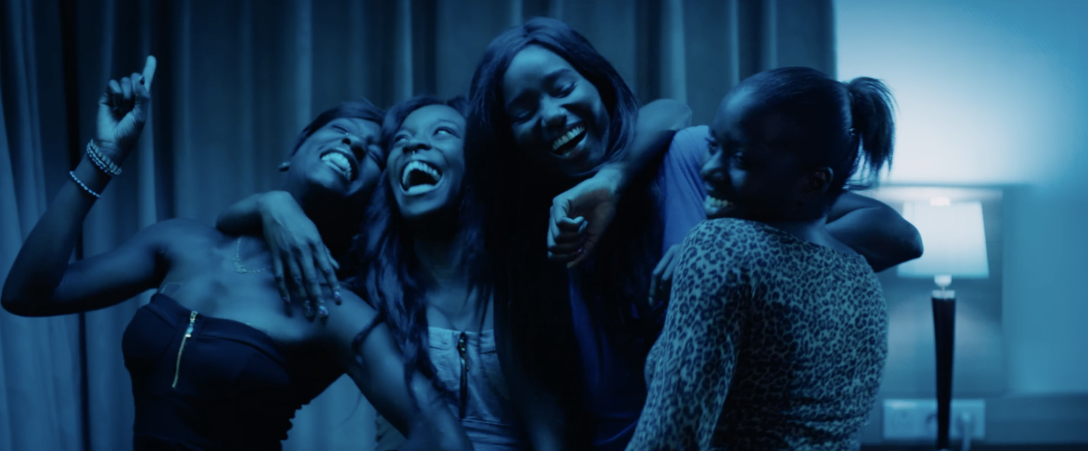
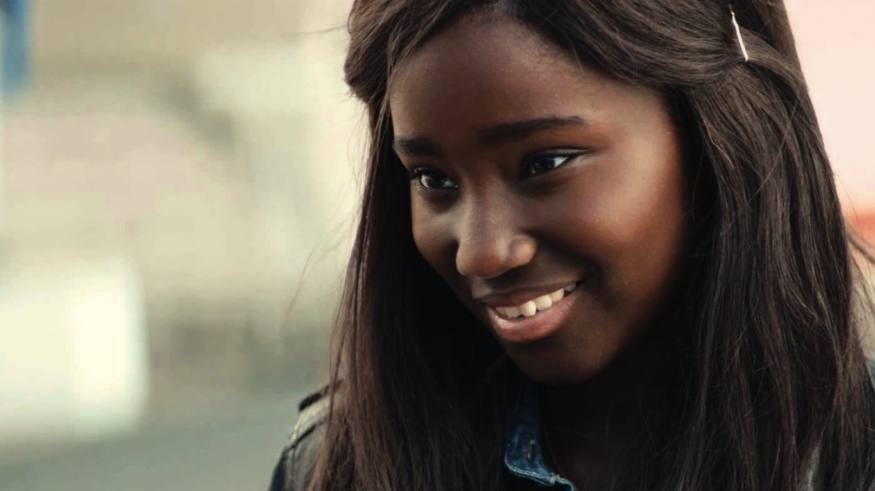
About half an hour into Girlhood, Céline Sciamma visualises the moment that 16-year-old protagonist Marieme (Karidja Touré) finds a temporary sense of belonging. Hanging out for a few weeks with a bad girl posse led by Lady (Assa Sylla), Marieme finds herself in the group but not quite one of the gang, always off to one side while being auditioned as the potential fourth member. In a hotel room, the girls have booked for a party, Marieme lies back as the others lipsync to Rhianna's 'Diamonds'. Halfway through the song, Marieme joins them. The lipsyncing stops and the girls, united, sing out loud. At that moment they're a group that Marieme is now fully part of. A moment that Marieme herself may not consciously recognise, but it's one of many that's powerfully and cinematically communicated in Girlhood.

The film's effective title is more striking than a direct translation of the French 'Bande De Filles', but coming so soon after Richard Linklater's Oscar-winning Boyhood, it somewhat mis-advertises Marieme's story as a feminised take on that film. Both are coming of age stories, but Marieme's experience couldn't be more different from Linklater's 12 years in the life of the suburban every boy. Set in the black community of the Paris banlieues, Marieme falls in with these troublesome teens, largely to get away from a troubled home life with her younger sisters, a single mother, and an abusive older brother. Some of the narrative incidents as she drifts towards and away from the gang, and a boyfriend she has to keep secret from her brother, are familiar, but Sciamma's perceptive screenplay has a sensitive and deep understanding of growing pains, beautifully borne out by the first-time performances of her cast.

This is Sciamma's third film, and it seems to mark a growth in confidence. It still finds the writer-director tackling the subject of a young woman coming of age, but here she engages with a different community and sets aside the LGBTQ issues confronted by characters in 2008's Water Lilies and 2011's Tomboy. Girlhood retains the intimacy of the previous films, but feels like a larger and more cinematic work, right from the opening sequence of an American football game between Marieme and her friends and another local team. It's a high energy beginning, powered by the ground level visuals and the choice of Light Asylum's 'Dark Allies' on the soundtrack. It also feels like the end of a chapter of Marieme's life - one we've not seen - as the lights go out in the stadium and the title appears against a black screen, signalling a new phase. 

This idea of phases beginning and ending is key to the film, which unfolds in five acts, each bracketed with a recurring motif. Sciamma ends the first three acts with a shot of Marieme's back, showing her literally turning it on a part of her past. The last two acts make subtle shifts in this pattern, but the lighting and framing is identifiably recurrent, with the camera always settled on Marieme's face in the first frame of each new act. These progressions feel like importantly demarcated chapters in Marieme's life, as Para One's score rises and a black screen marks a definitive act break, allowing a breather from the various anxieties of adolescence and a moment for the audience to reflect on the hard road of maturation for the life unfolding before them.

Marieme's experiences with Lady and their friends Adiatou (Lindsay Karamoh) and Fily (Mariétou Touré) form the bulk of the film. Not all are positive; the girls intimidate other pupils at Marieme's school for money and there are fights between gangs, but Sciamma refrains from judging, presenting these events as part of a complex social picture. Set almost entirely within the black communities of the banlieus, racism only occasionally rears its head, but there are notable incidents. As the girls browse in the mall, a white employee keeps a not too subtle eye on Marieme, assuming she might be out to steal. It's an uncomfortable scene, one the young cast have said rings true in their own lives. 

The girls are marginalised sexually as well as racially. Early on, the excited chatter of the group walking home from the American football game slows first to a murmur then to silence as they pass a group of boys. Much later, to survive in the male-oriented world of drug dealing, Marieme largely adopts an outwardly masculine swagger, unsmiling, she has a fierce appearance that presents a tough front. We can perhaps see the roots of this presentational tactic in the way Marieme is treated by her brother Djibril (Cyril Mendy). We get a sense of the fact she's scared of him and what he might do; when Marieme notices her younger sister's physical development and urges her to hide this from Djibril. The full implications of this are never dug into, but it sets a tense tone for any scenes in the household. That tension threatens to explode in one disturbing scene after Marieme returns home from her hotel party, when Djibril hugs his sister, only to tighten his grip and begin choking her. It's easy to see how Marieme's choice in how to present herself later is a way to defuse threats like this before they arise.

Despite going to some dark places, Girlhood does find moments of levity. The girls may appear fierce when facing down another gang in an argument across the platforms of a metro station, but they're also silly, funny, immature teenagers. As much as the Diamonds singalong is about Marieme becoming fully part of the group, it's also a pure moment of escape, of girls simply being girls together. In the lighter-hearted scenes, there are even flashes of broader comedy, such as when the girls go to play crazy golf and Fily gets upset when Adiatou does better than her. 

It's rare that these moments of escape have such an uncomplicated purity to them. Sciamma allows the real world to intrude frequently, most notably when the girls, minus Lady, run into an old member of their gang, now a parent to a small child. In this interaction we get a glimpse of the likely future; that the gang will break up and the girls will almost certainly end up in some sort of depressing domesticity, replaced by a younger generation. This is something seen beginning, when Marieme - now as much a leader of the pack as Lady - has to drag her sister away from a younger gang.

Like a mixed up teen, Girlhood has many mood swings, sulky one minute and jubilant the next, but these are knitted together in a way that feels like life itself by the completely natural performances of the four girls, all of them non-actors prior to shooting. Fily and Adiatou are less defined, but Lindsay Karamoh and Mariétou Touré each have their memorable moments. Assa Sylla as Lady and  Karidja Touré as Marieme make indelible impressions. Sylla is hugely charismatic, drawing the camera with just a hard stare, and a presence and attitude that marks her out as a natural leader. Initially all front, Lady is confrontational even when she invites Marieme to join the girls on an afternoon in town, but hidden behind that pose is a vulnerability that becomes visible, the more Marieme begins to understand and imitate Lady. 

Karidja Touré has the hardest job in the film, mapping Marieme's maturation in the way her persona changes through subtle shifts of confidence; none more so than when Lady renames her 'Vic' (for Victory). Slowly 'Vic' assumes some of Lady's dominance, even fighting battles for her. At other times those internal changes are signalled by external appearance, particularly Marieme's hair. At first, her long, childlike braids are removed and her hair straightened to make her seem womanly and chic before she starts dealing drugs and changing her hair to a harder look that enables her to cope better in that environment. Toure's performance is all the more moving for the emotional details she puts into her many changes of 'costume' that are worn like a girl trying on a new identity. 

Girlhood doesn't suggest that growing up is easy, and Sciamma never tries to assure the viewer that everything is going to work out for Marieme, leaving us to make up our own minds about the ending. Karidja Touré has said that she sees Marieme going off into a successful life, but even if one were to feel as hopeful about her future, it's clear that achieving this will be far from simple. Whatever the challenges, based on what we've already seen her go through, Marieme seems ready to step up and meet them, and it's through these experiences that, when the film goes to black for the last time, it feels like she's finally found an identity with which to do just that.
★★★★★